Troubleshooting Common Water Heater Problems in Bullhead City Homes
Learn how to troubleshoot common water heater problems in Bullhead City, including hard water scale, strange noises, and temperature fluctuations.
Understanding Water Heater Issues in the Desert Environment
When a water heater starts acting up in Bullhead City, the symptoms are rarely random. Local water conditions, characterized by high mineral content and hard water, play a major role in how residential and commercial water heaters perform and how long they last. Whether you are dealing with lukewarm water, sudden leaks, or strange rumbling noises from the tank, understanding what is happening inside the system can help you troubleshoot safely and decide on the right next steps.
This guide breaks down the most frequent water heater problems, what causes them, how to separate normal operating behaviors from actual faults, and what you can safely check before bringing in a professional.
1. No Hot Water or Inadequate Hot Water
Running out of hot water too quickly or having no hot water at all is one of the most common complaints. The cause depends heavily on whether you have a standard tank-style electric water heater, a gas unit, or a tankless system.
For Electric Water Heaters
If your electric water heater stops producing hot water completely, the culprit is often an electrical issue rather than the tank itself. Inside an electric tank, there are typically two heating elements and two thermostats. If the upper thermostat fails or the reset button on the high-limit switch trips, the water will not heat. Over time, heavy mineral buildup (scaling) from hard water can coat the lower heating element, forcing it to work harder until it eventually burns out.
For Gas Water Heaters
If a gas water heater goes cold, check the pilot light first. If the pilot light refuses to stay lit, the thermocouple—a safety device that detects whether the flame is burning—may be failing or covered in soot. Another common issue is a faulty gas control valve.
Diagnostic Checklist:
- Check your electrical panel to ensure a breaker has not tripped.
- Verify that the gas supply valve is fully open (if you have a gas unit).
- Note whether the hot water capacity has slowly diminished over weeks—this often points to heavy sediment accumulation inside the tank reducing actual water volume.
2. Strange Noises: Rumbling, Popping, or Sizzling
Water heaters are designed to operate relatively quietly. If yours is making disturbing noises, your system is trying to tell you something specific.
Rumbling and Popping
A deep rumbling or popping sound usually indicates heavy sediment buildup at the bottom of the tank. In Bullhead City, the minerals dissolved in the municipal or well water settle out when heated and form a layer of solid sediment at the bottom of the tank. When the burner fires up underneath (or the lower electric element heats), trapped water beneath this sediment blanket boils and creates steam bubbles that push their way up, making a rumbling noise.
Sizzling or Hissing
A sizzling sound typically occurs when condensation drips down onto a hot gas burner, which is normal during startup. However, in electric water heaters, a continuous sizzling sound can indicate a failing element gasket or a small leak spraying water onto electrical components.
3. Discolored, Rusty, or Smelly Water
The quality of the water coming out of your hot taps can reveal the internal condition of your water heater tank.
Rusty or Brown Water
If only your hot water is discolored, the anode rod—a sacrificial metal rod designed to attract corrosive elements in the water so they attack the rod instead of the steel tank—may be completely depleted. Once the anode rod is gone, the interior glass-lined tank begins to rust. If the tank itself is rusting from the inside out, replacement is usually the only permanent solution.
Rotten Egg Odor (Sulfur Smell)
A sulfur or rotten egg smell is often caused by a reaction between harmless sulfur bacteria in the water and a magnesium anode rod. Replacing a standard magnesium anode rod with an aluminum-zinc anode rod often resolves this issue.
4. Leaks and Moisture Around the Base
Finding water pooling around the base of a water heater causes immediate concern, but not all leaks mean the tank has ruptured.
Condensation vs. Active Leaks
During winter months or when filling a tank with very cold incoming water, normal condensation can form on the outside of the tank and pool on the floor. This usually stops once the water reaches operating temperature. Active leaks, however, are continuous.
Common Sources of Non-Tank Leaks:
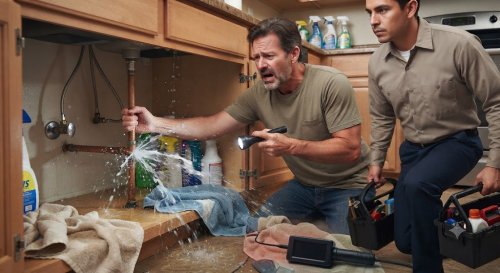
- Temperature and Pressure (T&P) Relief Valve: If this valve is dripping, it may be due to excessive water pressure in the home, a faulty valve, or water heater overheating.
- Inlet/Outlet Connections: Threaded fittings at the top of the tank can loosen over time due to thermal expansion.
- Tank Rupture: If the steel tank itself has cracked or rusted through, water will pool persistently from beneath the unit, and the tank cannot be repaired.
5. Maintenance Realities in the Desert
Because of local water hardness, preventive maintenance is critical for extending equipment life. Flushing the tank once a year removes accumulated sediment, keeping the heat transfer efficient and preventing premature tank failure. However, if a water heater has gone unserviced for many years and has never been flushed, attempting to open the drain valve can sometimes dislodge scale that prevents the valve from closing properly again.
When evaluating whether to repair or replace an aging unit—particularly units over 10 to 12 years old—consider the cost of frequent component replacements versus the long-term reliability and energy efficiency of a new installation.