Manufactured Home Belly-Board Leaks: Plumbing Diagnostics
Diagnose and repair manufactured home belly-board water leaks. Learn how to inspect insulation, locate underbelly pipe breaks, and prevent water damage.


Diagnosing Manufactured Home Belly-Board Leaks and Underbelly Failures
A manufactured home belly-board leak occurs when supply lines, waste pipes, or condensate drains rupture within the sealed underbelly of a mobile or manufactured home, causing water to pool inside the black polyethylene vapour barrier (the belly-board). Unlike site-built homes with concrete slabs or crawl spaces, manufactured homes feature a suspended floor assembly insulated with fiberglass batts and enclosed by a puncture-resistant woven polyethylene sheet. When a supply line pinhole or a slip-joint drain fitting fails, hundreds of gallons of water can collect unnoticed inside this thermal envelope, saturating the insulation, rotting wooden floor decking, and creating severe structural sag.
Addressing an underbelly leak requires understanding the unique physical mechanics of manufactured home plumbing. Supply lines running beneath the floor joists are typically constructed of flexible polybutylene (in older units) or PEX tubing, subject to pressure fluctuations and thermal stressing. Meanwhile, ABS or PVC drain lines rely entirely on gravity and precise slope. If a pier shifts due to desert soil settling or expansive clay cycles common throughout Mohave County, the resulting structural deflection can shear PVC drain joints or pull flexible supply lines taut against sharp metal frame members.
Establishing clear diagnostic boundaries prevents unnecessary property damage. If water is pooling on the ground directly beneath a specific plumbing fixture, the issue is typically localized to an exposed trap or tailpiece. However, if the black belly-board is bulging downward, squishy underfoot when walking inside the home, or emitting a musty odor without an obvious surface source, the failure is sealed within the underbelly assembly and demands immediate triage.
Overlooked Trade Secrets for Manufactured Home Plumbing Systems
Experienced plumbing technicians working in the desert Southwest encounter specific failure modes that standard residential guides overlook. In Bullhead City and the surrounding Colorado River region, extreme water hardness (high total dissolved solids) accelerates mineral precipitation inside water heaters and supply lines, while ambient summer temperatures exceeding 120°F in unventilated crawl spaces and skirting compartments degrade older plastic piping materials.
- Polybutylene Fragility: Homes built between the late 1970s and mid-1990s often contain gray or blue polybutylene supply piping connected by plastic insert fittings and aluminum crimp rings. High chlorine levels in municipal water supplies react chemically with polybutylene, causing it to become brittle from the inside out until it pinholes against framing members.
- Vapor Barrier Trapping: The reinforced polyethylene belly-board is waterproof by design. While this protects the underside from road spray and desert pests, it also acts as a swimming pool liner when a plumbing leak occurs. Water will not readily drain out; instead, it migrates horizontally along the lowest points, soaking thousands of square feet of fiberglass insulation.
- Drain Line Sagging: Manufactured home waste systems rely on adjustable metal strap hangers attached to the steel frame. Over time, vibrations from traffic or shifting soil cause these straps to loosen, creating counter-slopes where wastewater pools, solids accumulate, and joint connections eventually pull apart under hydraulic weight.
- Condensate Line Disconnections: High-efficiency HVAC air handlers installed in utility closets often route primary and secondary condensate drain lines directly down through the floor into the belly-board. Algae clogs or thermal expansion can pop these unglued PVC or flexible vinyl joints loose, dumping gallons of cooling-season condensation directly into the insulation.
Safe Homeowner Triage vs. Dangerous DIY Boundaries
When discovering a sagging belly-board or an active underbelly leak, homeowners must act methodically to minimize damage without compromising personal safety.
- Locate the Main Supply Shutoff: Immediately isolate the home from the municipal water supply. Most manufactured homes feature a main shutoff valve located inside an interior utility closet, beneath the kitchen sink, or directly outside near the water heater access panel or street meter box.
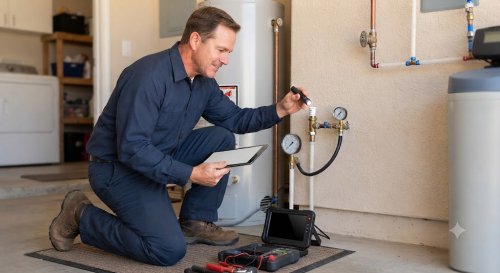
- Perform Meter and Gauge Tests: If the main shutoff stops the water accumulation, check the water meter dial (if accessible) while all indoor fixtures are closed to confirm whether the leak stems from pressurized supply lines or unpressurized gravity drains.
- Avoid Puncturing the Belly-Board Casually: Homeowners often feel tempted to slash the sagging black plastic belly-board to drain trapped water. While releasing heavy water weight is sometimes necessary to prevent total floor collapse, doing so blindly risks severing hidden electrical wiring, gas lines, or heating ducts routed through the same cavity.
- Refrain from Chemical Drain Openers: Never pour caustic acid or lye-based chemical drain cleaners into clogged manufactured home waste systems. These products generate extreme exothermic heat that can melt thin-walled PVC or ABS pipes and chemically degrade deteriorated joints in confined underbelly spaces.
Realistic Repair Approaches and Decision Support
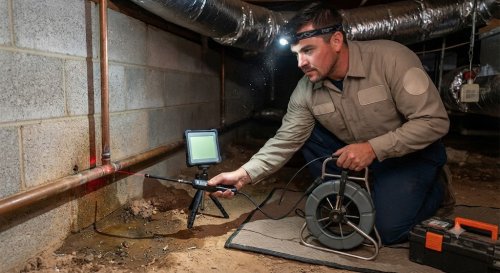
Repairing a manufactured home plumbing failure requires specialized access protocols compared to traditional stick-built construction. Technicians must drop a section of the belly-board, remove saturated insulation, locate the compromised pipe segment, and rebuild the damaged structural support before restoring the thermal envelope.
| Repair Approach | Ideal Application | Key Consideration |
|---|---|---|
| Spot Clamp / PEX Coupling | Isolated pinhole leaks on straight PEX runs | Temporary to semi-permanent; must replace entire pipe if brittle. |
| Sectional Pipe Replacement | Cracked ABS drains or sheared PVC fittings | Requires maintaining precise gravity slope (1/4 inch per foot). |
| Full Repiping (PEX Conversion) | Aging polybutylene systems with multiple failures | Eliminates all legacy plastic fittings; routed efficiently through floors. |
| Underbelly Restoration | Post-repair insulation and vapor barrier replacement | Must use reinforced polyethylene tape and patch material to seal out moisture. |
Financial and logistical planning for manufactured home repairs depends heavily on access constraints. Working within a cramped crawl space beneath a skirted mobile home requires specialized low-profile excavation tools and careful handling of asbestos-free insulation or fiberglass materials. Furthermore, replacing degraded polybutylene supply lines with modern cross-linked polyethylene (PEX) systems ensures long-term reliability against aggressive desert water chemistry and thermal cycling.
Frequently Asked Questions
What causes a manufactured home belly-board to bulge or sag?
A sagging belly-board is almost always caused by accumulated water trapped inside the waterproof polyethylene vapor barrier. Common sources include leaking pressurized supply lines, fractured ABS/PVC waste joints, disconnected HVAC condensate lines, or exterior rainwater intrusion penetrating damaged skirting.
Can I patch a polybutylene pipe in a mobile home, or does it need full replacement?
While temporary brass compression couplings can stop an isolated pinhole leak on polybutylene pipe, patching is rarely a permanent solution. Because polybutylene degrades chemically from exposure to treated municipal water over decades, repairing one section often leaves adjacent brittle pipe vulnerable to future bursts.
Should I cut open the black plastic underbelly to let leaked water out?
Cutting the belly-board can relieve extreme weight that threatens to buckle floor joists, but it must be done with extreme caution. Always inspect the area with a flashlight first to avoid puncturing electrical wires, flexible gas lines, or aluminum heating ducts routed through the same underfloor space.
How do I know if the leak is from a supply line or a drain line?
Supply lines remain under constant street pressure, meaning they will leak continuously or whenever a faucet is open, even if no fixtures are actively draining. Drain lines only leak when water is poured down a sink, tub, or flushed down a toilet. Monitoring the water meter with all fixtures closed helps differentiate the two.
What steps are required to restore the underbelly after a plumbing repair?
Once the plumbing leak is permanently repaired and tested, all wet, compressed fiberglass insulation must be removed to prevent mold growth and wood rot on the floor joists. Dry insulation is installed, and the cut polyethylene belly-board is patched using specialized waterproof woven tape and adhesive designed specifically for mobile home vapor barriers.