How Hard Water Can Shorten the Life of Your Water Heater
Discover how hard water mineral buildup damages your water heater, reduces efficiency, and causes premature failure—plus simple steps to protect your system.

How Hard Water Can Shorten the Life of Your Water Heater
Your water heater is one of the hardest-working appliances in your home, running continuously to provide warm showers, clean dishes, and hot laundry. However, if you live in an area with hard water, high levels of dissolved minerals—primarily calcium and magnesium—are quietly causing hidden damage inside your tank or unit.
While hard water isn't harmful to consume, it is notoriously tough on heating appliances. Left unmanaged, hard water can cut your water heater’s expected lifespan by 30% to 50%.
Here is a breakdown of how hard water causes damage, the early warning signs to watch for, and how you can protect your investment.
How Hard Water Destroys Your Water Heater
When hard water is heated, the dissolved calcium and magnesium solidify and settle out of the liquid. This process creates limescale (calcium carbonate deposits), which wreaks havoc on internal water heater components in three primary ways:
-
Sediment Accumulation (Tank Heaters)
In traditional tank water heaters, mineral heavy solids drop to the bottom. Over time, this forms a thick layer of mineral sludge at the base of the tank, right above the lower burner or heating element.
-
Insulation and Overheating
Limescale acts as a thermal insulator. In gas water heaters, the burner must heat through inches of rock-like sediment before reaching the water. In electric water heaters, scale coats the heating elements directly, causing them to overheat, burn out, and fail prematurely.
-
Internal Corrosion and Stress
Because the heating elements or tank bottom must burn hotter and longer to heat the water, the steel tank experiences excessive heat stress. This breaks down protective glass linings, accelerating rust and leaking.
Standard vs. Hard Water Lifespan Comparison
| Water Heater Type | Expected Lifespan (Soft Water) | Expected Lifespan (Hard Water - Untreated) |
| Traditional Tank (Gas/Electric) | 10 – 12 Years | 5 – 8 Years |
| Tankless Water Heater | 15 – 20 Years | 6 – 10 Years (due to clogged heat exchangers) |
4 Signs Hard Water Is Damaging Your Unit
-
Rumbling or Popping Noises: Trapped water boiling beneath a thick layer of bottom sediment creates loud popping or kettling sounds inside the tank.
-
Lower Hot Water Supply: A heavy layer of scale displaces volume in the tank and drastically slows recovery times, leading to lukewarm showers.
-
Higher Utility Bills: Scale buildup forces your heater to run longer to heat the same volume of water, noticeably raising gas or electric costs.
-
Frequent Heating Element Failures: Electric water heaters requiring frequent element replacements are almost always reacting to heavy hard water buildup.
How to Protect Your Water Heater
Fortunately, you can prevent scale damage and extend the lifespan of your unit with proactive maintenance and treatment:
-
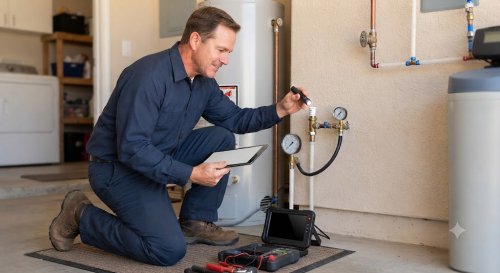
Flush the Tank Annually: Drain and flush your tank-style water heater once or twice a year to clear out loose sediment before it hardens into scale.
-
Descale Tankless Units: Flush tankless water heaters using a vinegar or descaling solution every 6–12 months to clear heat exchanger lines.
-
Install a Whole-Home Water Softener: Ion-exchange softeners remove calcium and magnesium before water enters your home, completely preventing new scale formation.
-
Lower the Temperature Setting: Keeping your water heater set to 120°F (49°C) slows down the rate at which minerals precipitate out of the water.
The Bottom Line: Hard water is a silent appliance killer. Taking preventative action through routine flushing or installing a water softener will save you hundreds in energy bills and prevent costly premature water heater replacements.