Sewer Gas Odors in Bullhead City Homes: Evaporated Traps
Discover why sewer gas odors plague Bullhead City homes during summer. Learn how 115°F heat evaporates floor drain traps and how to stop toxic emissions.


Sewer gas odors permeating a Bullhead City home stem almost exclusively from dry or compromised floor drain P-traps failing to maintain the mandatory water seal against the municipal sewer or private septic line. In the scorching Colorado River Valley climate, ambient temperatures exceeding 115°F accelerate the evaporation rate of standing water inside unvented or infrequently used floor traps—such as those in laundry rooms, utility closets, and guest bathrooms. Once the standing water barrier drops below the trap weir, sewer gases composed of methane, hydrogen sulfide, and ammonia bypass the drainage system and infiltrate living spaces via positive pressure displacement from the main sewer lateral.
Why Extreme Desert Heat Empowers Methane Migration
The relentless thermal load characteristic of Bullhead City, Fort Mohave, and Laughlin summers does more than strain air conditioning units; it wreaks havoc on household plumbing hydraulics. Floor drain traps are engineered to hold a two-to-four-inch column of water, creating an airtight mechanical block between the habitable zone and the sewer stack. However, when indoor slab temperatures climb and relative humidity drops into the single digits, water trapped inside these subterranean or slab-embedded PVC lines vaporizes within days. This phenomenon is severely exacerbated in seasonal snowbird residences left vacant for months. As the water completely dissipates, the trap loses its hydraulic head pressure, opening a direct, unobstructed pneumatic pathway for toxic and foul-smelling sewer gases to vent directly into the structure.
The Manufactured Home Underbelly Vapor Trap Risk
A substantial portion of the housing inventory across Mohave Valley and rural Bullhead City consists of manufactured, park-model, and mobile homes resting on uninsulated pier foundations. In these structures, floor drains and washing machine standpipes often route through flexible ABS or thin-walled PVC piping suspended within the enclosed underbelly space, protected only by a polyethylene belly board. When a floor drain trap dries out, leaking sewer gas does not immediately vent into the main room; instead, it pools inside the sealed underbelly cavity. The trapped gas reacts with humidity and heat, softening plastic joints and permeating porous flooring materials. Homeowners frequently misdiagnose this as a rotting subfloor when the actual root cause is an unsealed floor drain communicating directly with the chassis cavity.
Mineral Crust Accumulation and Vent Stack Choking
Colorado River water is heavily saturated with dissolved calcium carbonate and magnesium salts. As water evaporates from floor drains or nearby fixtures, it leaves behind crusty, rock-hard mineral rings. Over time, this calcification builds up inside the trap dip and the upper vent stack. When a mineral scale ring constricts the trap's internal diameter, it alters the velocity of wastewater passing through, frequently siphoning the remaining water seal dry during heavy household flushes. Furthermore, exterior roof vent stacks on desert homes are vulnerable to wind-blown debris and nests from desert wildlife, creating negative pressure conditions that actively pull the water right out of interior floor drain traps every time a toilet is flushed or a bathtub is drained.
Safe Triage Versus Dangerous DIY Boundaries
Homeowners facing sudden sulfur smells can execute specific safe diagnostic checks without risking structural damage:
- The Primer Pour Test: Slowly pour one quart of clean water down every suspected floor drain, followed by two tablespoons of mineral oil or food-grade vegetable oil. The oil floats on top of the water, creating a slow-evaporating barrier that halts evaporation for months.
- The Indicator Check: Perform a visual check of surrounding fixtures. If a nearby sink or shower gurgles when flushed, the issue extends beyond a dry trap into main vent stack clogging.
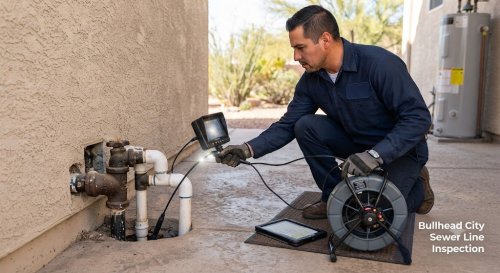
- Visual Line Inspection: Inspect accessible cleanout plugs in the garage or exterior perimeter for weeping moisture or loose threading.
Strict Safety Boundaries: Never attempt to force chemical drain openers down a floor drain suspected of having a dry or cracked trap. In extreme desert heat, exothermic chemical reactions inside confined plastic traps can instantly melt PVC, warp ABS, or boil over, causing severe chemical burns. Furthermore, never enter a crawl space or sealed manufactured home underbelly if a heavy concentration of sewer gas is detected, as methane displacement can rapidly deplete oxygen levels.
Diagnostic Comparison of Drain Odor Sources
| Odor Trigger | Primary Diagnostic Test | Immediate Field Resolution |
|---|---|---|
| Evaporated P-Trap | Pour 32 oz water + oil; check if odor ceases within 2 hours. | Prime trap with water and float mineral oil layer on top. |
| Cracked Trap Primer Line | Inspect automated trap primer connected to nearby lavatory. | Repair or cap off faulty mechanical trap primer delivery line. |
| Blocked Roof Vent Stack | Listen for gurgling sounds in floor drains when flushing toilets. | Clear exterior roof vent obstruction from bird nests or debris. |
| Degraded Wax Ring Seal | Gently rock base of nearby toilets to check for movement. | Lifting and resetting toilet on a reinforced heavy-duty wax ring. |
Frequently Asked Questions
Why does my laundry room floor drain smell only when the air conditioning is running?
High-capacity central air conditioning systems pull massive volumes of air return from the home, creating a localized negative pressure zone. This negative pressure acts like a vacuum, actively pulling sewer gas up through any compromised or low-water floor drain traps and circulating the odor throughout the ductwork.
Can I use cooking oil to keep floor drain traps from drying out in summer?
Yes, pouring vegetable oil or mineral oil down the drain after priming it with water is an effective field-tested method. Because oil is less dense than water and does not evaporate at normal atmospheric temperatures, it forms an impermeable floating film that stops water molecules from escaping into dry indoor air.
How fast does standing water evaporate from a floor drain in Bullhead City?
During peak summer months when indoor ambient temperatures hover around 85°F to 90°F with near-zero humidity, a standard two-inch P-trap water seal can completely evaporate in as little as 10 to 14 days if the drain receives zero use.
What is a trap primer and do desert homes need them?
A trap primer is an automatic mechanical device connected to a nearby water supply pipe (like a washing machine box or sink supply) that periodically releases a metered burst of water into the floor drain trap. They are highly recommended in desert environments to maintain water seals in infrequently used utility rooms.
Is exposure to sewer gas from a dry floor drain dangerous to pets and children?
Yes. Hydrogen sulfide and methane present in sewer gas can cause headaches, dizziness, nausea, and respiratory irritation. Because heavy sewer gases tend to stratify and stay closer to the floor, children and pets playing near floor drains absorb higher concentrations of these airborne toxins.