Troubleshooting Low Water Pressure in a Bullhead City Home
Learn how to diagnose and troubleshoot low water pressure in your Bullhead City home. Understand mineral buildup, pressure regulators, and whole-house vs. fixture issues.

Understanding Low Water Pressure in Your Home
Dealing with a weak stream from your shower or kitchen faucet can be immensely frustrating. When water pressure drops, the immediate instinct is often to worry about a major pipe failure. However, low water pressure can stem from a wide variety of sources, ranging from a simple clogged aerator to a failing pressure reducing valve (PRV) or localized mineral accumulation.
In regions with hard water—such as the desert environment of Bullhead City, Arizona—mineral scale buildup is a frequent silent culprit. As hard water evaporates or moves through plumbing lines, dissolved calcium and magnesium leave behind solid deposits that gradually constrict the interior diameter of pipes and fixtures.
Pinpointing the exact cause requires systematic troubleshooting to determine whether the issue is isolated to a single fixture or affecting the entire property.
Is the Issue Isolated or Whole-House?
The very first diagnostic step is identifying the scope of the problem. Ask yourself:
- Does the weak pressure affect only one faucet or showerhead?
- Does it happen with both hot and cold water, or only one temperature?
- Is every fixture in the house experiencing reduced flow simultaneously?
Fixture-Specific Restrictions
If only one sink or shower has low pressure, the problem is almost certainly localized to that specific fixture. In most cases, the culprit is a clogged aerator on a sink or a scaled-up showerhead faceplate. Mineral scale easily plugs these small exit points, choking off the stream even though the water supply behind the wall is flowing at full force.
To check a sink aerator, unscrew the small nozzle at the tip of the faucet spout. You will typically find a tiny screen mesh packed with grit, sand, or white crusty mineral deposits. Soaking this screen in a mild descaling solution or vinegar for an hour usually clears the debris and restores full flow immediately.
Whole-House Supply Issues
If multiple faucets, showers, and hose bibs throughout the house show a sudden or gradual drop in pressure, the issue lies in the main supply system. Potential causes for whole-house pressure drops include:
- A partially closed main water shutoff valve.
- A failing or misadjusted pressure reducing valve (PRV).
- Severe mineral scaling inside galvanized steel supply pipes (common in older homes).
- A municipal supply restriction or maintenance event on the city water main.
Checking the Main Shutoff Valve and Water Meter
If your entire home has low pressure, verify that your main water shutoff valves are fully open. If someone recently performed maintenance, landscaped, or worked near the water meter, a valve may have been left partially closed.
The main shutoff is typically located near the exterior perimeter of the home where the water line enters, or buried inside an underground meter box near the property line. A gate valve that has been turned partially closed will significantly restrict volume and pressure. Ensure the handle or lever is completely parallel to the pipe (for ball valves) or turned fully counter-clockwise (for gate valves).
The Role of the Pressure Reducing Valve (PRV)
Most homes connected to municipal water supplies utilize a Pressure Reducing Valve (PRV) to lower high incoming municipal pressure to a safe level for household plumbing—usually between 50 and 70 psi.
When a PRV begins to fail, it typically does one of two things: it either allows pressure to spike dangerously high, or it seizes up internally, choking off water flow and causing a dramatic drop in pressure across the entire house. PRVs contain internal springs and rubber diaphragms that wear out over time, especially when exposed to continuous heat and mineral-laden water.
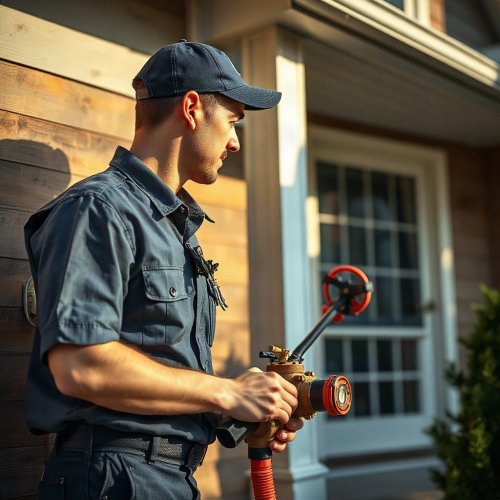
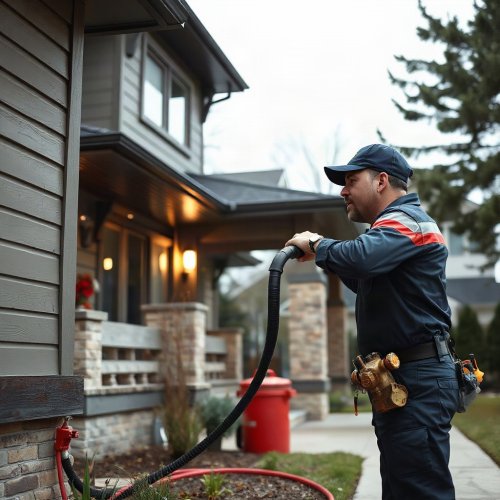
If you suspect a failing PRV, a plumber can attach a pressure gauge to an outdoor hose bib to test the static and dynamic pressure. Adjusting the bolt on top of the PRV may temporarily alter pressure, but if the internal components are worn or clogged with mineral debris, replacement is usually necessary.
How Hard Water Affects Water Pressure Over Time
In Bullhead City and surrounding Mohave County areas, groundwater carries high mineral content. Over years of service, these minerals precipitate out of the water and adhere to the inner walls of plumbing pipes.
This accumulation is particularly problematic in:
- Galvanized steel pipes, which are notoriously prone to internal rust and mineral restriction.
- Water heater inlet and outlet nipples, where scale buildup can restrict the hot water supply to the entire house while cold water flows normally.
- Flexible supply lines connected to toilets and sinks, which can collect sediment at their connection points.
If your cold water pressure is normal but your hot water pressure is weak, the issue is often concentrated inside the water heater tank or its immediate piping connections due to heavy sediment buildup.
Next Steps and When to Call a Professional
Before calling for professional help, you can easily perform these safe preliminary checks:
- Inspect and clean all sink aerators and showerheads.
- Verify that the main water shutoff valve is wide open.
- Check if the low pressure affects only hot water, which points toward the water heater.
- Ask neighbors if they are experiencing similar pressure drops, which may indicate a temporary municipal utility issue.
If these basic checks do not reveal the source, or if you suspect a failing pressure regulator, hidden underground leak, or severely corroded supply piping, a licensed plumbing professional can perform diagnostic pressure tests and inspect your system safely without guesswork.