Common Causes of Low Water Pressure in Bullhead City Homes
Discover why your Bullhead City home has low water pressure. Learn how to troubleshoot local hard water mineral buildup, pressure regulators, and hidden plumbing issues.


Understanding Low Water Pressure in Your Home
Dealing with a weak stream from your showerhead or a sluggish kitchen faucet can make everyday chores frustrating. When water pressure drops, the immediate instinct is often to worry about a major pipe failure. However, low water pressure can stem from a wide range of issues—some as simple as a clogged fixture aerator, and others involving the main water supply line or pressure regulator.
In the arid climate of Bullhead City, Arizona, local environmental factors play a unique role in how plumbing systems age and perform. Understanding the difference between a localized fixture restriction and a whole-house supply problem is the first step toward diagnosing the issue accurately without unnecessary expense.
Is the Problem Isolated or Whole-House?
Before investigating complex plumbing components, determine whether the low pressure affects a single fixture or every tap in the home.
- Single-fixture issue: If only one bathroom sink or shower has weak pressure, the problem is almost always localized to that specific faucet, supply line, or shutoff valve. The rest of the plumbing system is likely functioning normally.
- Whole-house issue: If multiple faucets, showers, and hose bibs simultaneously experience a drop in pressure, the issue originates closer to the main water source, the water meter, or the home's main pressure-reducing valve (PRV).
Common Causes of Localized Pressure Drops
When a single fixture loses pressure, the cause is usually related to mineral accumulation or mechanical blockage.
Aerator and Showerhead Mineral Buildup
Municipal water supplies carry dissolved minerals. Over time, as water passes through aerators and showerhead nozzles, these minerals—primarily calcium and magnesium—begin to precipitate out and crystallize. In regions with high mineral content like the American Southwest, this buildup can happen relatively quickly, gradually restricting the exit holes and cutting off water flow. Unscrewing the aerator screen or soaking the showerhead in a mild descaling solution often restores full flow immediately.
Partially Closed Supply Stops
Underneath sinks and behind toilets, individual shutoff valves control water flow. If a valve is bumped, partially turned during a previous repair, or suffers internal mechanical failure (such as a detached washer blocking the waterway), it can severely restrict water pressure to that specific fixture.
Common Causes of Whole-House Pressure Drops
When the entire house experiences low pressure, the causes require a different troubleshooting approach.
The Pressure Reducing Valve (PRV)
Most residential plumbing systems feature a pressure-reducing valve installed near the main water shutoff where the supply line enters the home. This device protects household pipes from excessively high municipal pressure. PRVs have internal springs and diaphragms that wear out over time. When a PRV fails, it often sticks in a closed or partially restricted position, starving the home of adequate water pressure. Adjusting the adjustment bolt on top of the PRV can sometimes temporarily restore pressure, but a failing valve typically requires professional replacement.
Main Shutoff Valve Restrictions
Both the municipal water meter shutoff (usually managed by the utility provider) and the home's main interior shutoff valve must be fully open. If either valve is even slightly closed, water volume and pressure downstream will drop significantly. It is always wise to verify that these valves are open all the way.
Corrosion and Scale Inside Piping
Older homes built with galvanized steel pipes are particularly susceptible to internal rust and mineral accumulation. Over decades, the inner diameter of the metal pipe shrinks as layers of scale build up, choking off water volume. While modern PEX and copper piping resist this type of interior constriction much better, older metallic systems frequently suffer from progressive pressure loss.
The Impact of Bullhead City’s Climate and Water Conditions
Properties in Bullhead City contend with extreme seasonal heat and mineral-heavy water. High ambient temperatures can increase thermal stress on plumbing components, while hard water accelerates scale accumulation inside water heaters, valves, and fixtures. Homes that sit vacant for parts of the year—such as seasonal winter residences—are also prone to scale hardening within stationary valves and plumbing lines, making regular system checks important before turning fixtures back on full-time.
Safe Troubleshooting Steps for Homeowners
Homeowners can safely perform several initial checks before calling a professional:
- Test multiple taps: Turn on both hot and cold water in different rooms to see if the issue is universal or specific to one side of the water heater.
- Inspect aerators: Unscrew sink aerators and check for trapped debris or mineral crust.
- Check shutoff valves: Ensure that the main water shutoff valve and individual fixture stops are fully open.
- Check with neighbors: If the whole neighborhood experiences low pressure, the municipal supplier may be performing maintenance or dealing with a main line repair.
When to Seek Professional Diagnosis
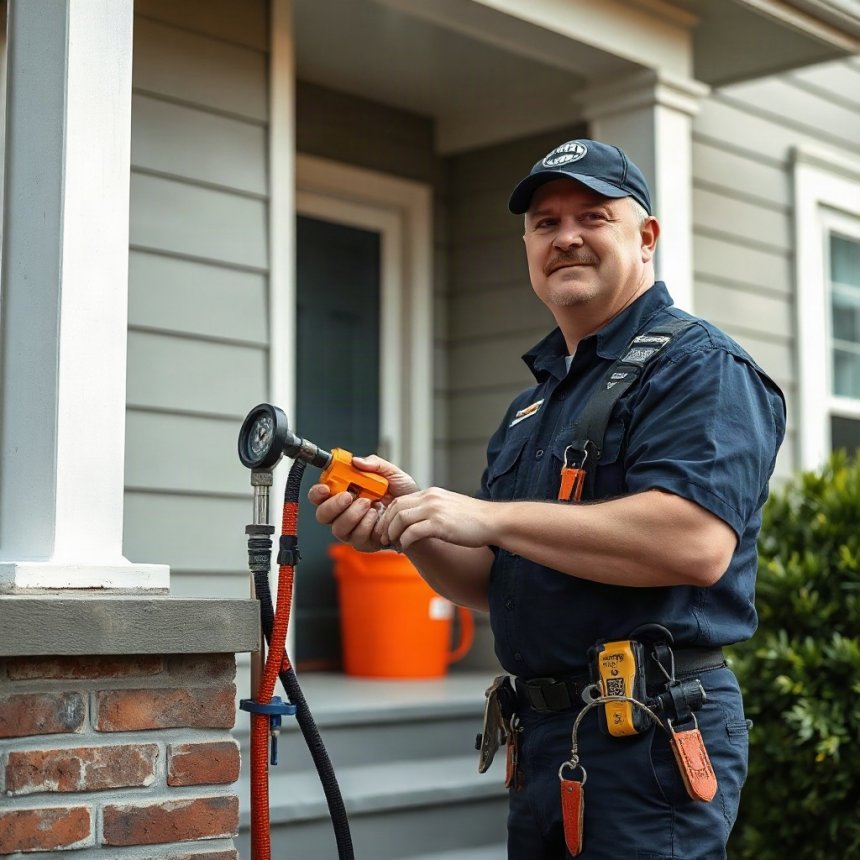
If fixture aerators are clean, main valves are fully open, and the pressure-reducing valve appears worn or unresponsive, a professional plumbing diagnosis is recommended. Plumbers use specialized pressure gauges attached to hose bibs to measure exact static and dynamic pressure levels, helping determine whether the restriction is coming from the municipal supply, a failing PRV, or an obstructed main line. Getting an accurate diagnosis ensures that you invest in the correct repair rather than replacing parts that are still functioning properly.