Why Your Water Heater Pilot Light Keeps Going Out: Causes & Fixes
Discover the common reasons why a water heater pilot light keeps going out, how to troubleshoot safely, and when to call a professional.

Understanding Why a Pilot Light Keeps Going Out
When a gas water heater pilot light repeatedly goes out, it is usually a sign that a safety mechanism is doing its job, or that the burner assembly is not receiving a steady supply of gas or air. Traditional tank-style gas water heaters rely on a small, continuously burning flame to heat the thermocouple, which in turn signals the gas valve that it is safe to allow main gas flow. If that flame goes out, the safety valve immediately shuts off the gas supply to prevent unburned gas from filling the room.
While relighting the pilot is a simple temporary fix, a pilot that goes out over and over points to an underlying mechanical or environmental issue. Understanding what causes this failure helps homeowners address the root problem rather than repeatedly crouching down with a lighter.
The Most Common Culprits
Several distinct issues can cause a pilot light to extinguish. Isolating the symptom helps narrow down the cause:
- A Faulty Thermocouple: This is the most frequent mechanical failure. The thermocouple is a copper safety probe positioned directly in the pilot flame. Over years of exposure to intense heat, thermocouples degrade, lose their internal electrical output, or become misaligned. Even if the flame is touching it, a weak thermocouple will fail to send the required electrical current to keep the gas valve open.
- Drafts and Air Supply Issues: Gas flames are sensitive to air movement. Strong drafts from nearby doors, windows, HVAC return vents, or garage doors can blow the small flame out. Additionally, water heaters installed in tight utility closets require adequate combustion air. If the room is starved for air, the flame suffocates.
- A Dirty Pilot Orifice: Dust, pet hair, and lint can accumulate around the burner assembly. A partial blockage in the tiny pilot tube restricts gas flow, resulting in a weak, flickering flame that cannot properly heat the thermocouple.
- Fluctuating Gas Supply or Pressure: If the gas regulator at the meter is failing or if sediment has entered the gas line, minor pressure drops can starve the pilot flame. This is less common, but worth noting if other gas appliances in the home show unusual behavior.
- Faulty Gas Control Valve: Sometimes the issue lies inside the main control unit mounted on the side of the tank. If the internal electromagnet fails to stay energized despite a healthy signal from the thermocouple, the valve will shut down.
What Homeowners Can Safely Check
Before assuming major repairs are needed, a homeowner can safely observe a few basic indicators:
- Inspect the Flame Color: A healthy pilot flame should be crisp, steady, and primarily blue with perhaps a tiny hint of yellow at the tip. If the flame is yellow, lazy, or floating away from the thermocouple, it indicates dirty burners, improper combustion air, or low gas pressure.
- Check for Alignment: Look to see if the tip of the thermocouple is sitting squarely in the middle of the flame. If it has been bumped during cleaning or installation work, it may not be getting hot enough.
- Examine the Surrounding Area: Check if new storage items, heavy dust, or weatherstripping have recently restricted airflow around the base of the water heater.
When a Problem Requires Professional Attention
While relighting a water heater is a routine task outlined in the manufacturer's user manual on the front of the tank, certain situations require a licensed professional:
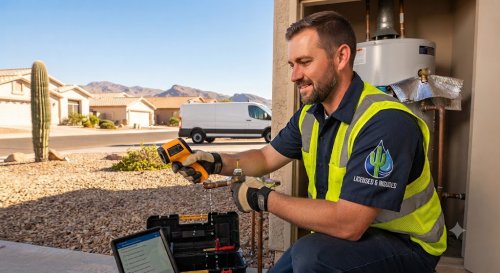
If replacing the thermocouple does not solve the problem, or if the gas control valve itself fails to hold a setting, the repair shifts from a simple component swap to handling main gas supply components. Working with gas lines, main valves, and sealed combustion chambers requires specialized tools and diagnostic equipment, such as multimeters to test millivolt output and manometers to measure gas pressure accurately.
Furthermore, if you ever smell persistent gas odor that does not dissipate after the pilot goes out, shut off the manual gas supply valve adjacent to the unit, leave the area immediately, and contact your gas utility provider or a qualified plumbing professional.
Preventing Future Ignition Issues
Water heaters in arid desert regions like Bullhead City operate under heavy demand, especially during seasonal shifts when groundwater temperatures vary. Routine maintenance goes a long way toward keeping gas appliances reliable. Keeping the area around the base of the water heater clear of dust, lint, and storage boxes ensures that combustion air flows freely. Scheduling an annual visual inspection of the burner assembly and venting system helps catch minor soot buildup and deteriorating parts before they leave you with cold water.