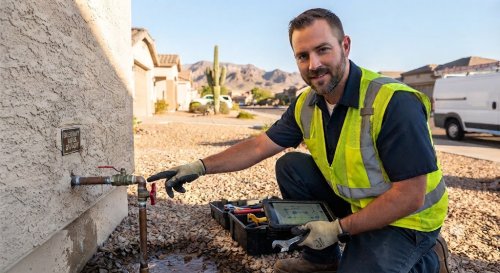
Troubleshooting Low Water Pressure in Bullhead City Homes
Learn how to diagnose and troubleshoot low water pressure in your Bullhead City home. Discover how hard water, mineral buildup, and regulators affect flow.


Understanding Low Water Pressure in Your Home
Dealing with a weak stream from your showerhead or a kitchen faucet that barely fills a glass is frustrating. When water pressure drops suddenly or fades over time, finding the root cause requires systematic troubleshooting. In many cases, the solution is straightforward, but understanding how your home's plumbing delivery system works is the first step toward restoring normal flow.
Before attempting any repairs or calling for professional help, it helps to isolate whether the issue is isolated to a single fixture, confined to hot or cold water only, or affecting the entire house.
Fixture-Specific vs. Whole-House Pressure Drops
The very first diagnostic step is checking other taps around the house:
- Single Fixture: If only one bathroom sink or shower has low pressure while the rest of the house flows normally, the restriction is local. This typically points to a clogged aerator, a partially closed supply stop valve under the sink, or a localized blockage within that specific fixture.
- Whole-House Issue: If multiple faucets, toilets, and showers experience weak flow simultaneously, the problem lies in your home's main water supply line, the main shutoff valve, or the pressure-reducing valve (PRV).
- Hot Water Only: If cold water pressure is strong but hot water is weak, the restriction is usually tied to the water heater supply valves, a failing sediment-choked water heater inlet, or an aging shutoff valve on the hot water line.
The Impact of Bullhead City's Mineral-Rich Water
Water quality plays a significant role in plumbing performance, particularly in the desert climate of Bullhead City, Arizona. Groundwater in the region naturally carries high concentrations of dissolved minerals, primarily calcium and magnesium. Over time, as water passes through pipes and fixtures, these minerals precipitate out, especially when heated.
This mineral accumulation—commonly known as scale—gradually narrows the interior diameter of pipes, valves, and fixture openings. A faucet aerator can become completely choked with white, crusty deposits in just a few months if hard water is left unchecked. Similarly, water heater dip tubes and internal tank connections can collect heavy mineral buildup, restricting the volume of hot water delivered to your home.
Common Culprits and Practical Checks
Before jumping to conclusions about failing pipes, check these common, easily accessible components:
1. Clogged Faucet Aerators
Unscrew the small screen nozzle (aerator) at the tip of your bathroom or kitchen faucet. If you see white mineral flakes or debris trapped inside, rinse it out or soak it in a mild vinegar solution for an hour. Reinstall it and test the water flow. This simple step resolves a surprising number of low-pressure complaints.
2. Partially Closed Supply Valves
Look underneath sinks or behind toilets for the small oval- or round-handled shutoff valves connected to the wall pipes. Ensure these valves are turned completely counterclockwise into the fully open position. If a valve was accidentally bumped or left partially closed during a previous repair, it will heavily restrict water volume.
3. The Main Shutoff Valve
Locate your home's main water supply shutoff valve—usually found near the water meter box outside or where the main line enters the house. Verify that the valve is completely open. If you have a gate-style valve, a worn internal mechanism can sometimes slip, meaning the exterior handle is turned open while the internal gate remains partially blocked.
The Role of the Pressure-Reducing Valve (PRV)
If your entire house has low water pressure, inspect your water pressure regulator (PRV). This bell-shaped brass device is typically installed on the main water supply line shortly after it enters the property.
Municipal water mains often deliver water at very high pressures to ensure adequate supply across neighborhoods. A PRV lowers this incoming pressure to a safe, manageable level (typically between 50 and 70 psi) before water enters your indoor plumbing.
When a PRV fails—often due to internal spring fatigue or mineral clogging—it can stick in a closed position, causing a drastic drop in home water pressure. Adjusting the top bolt on a PRV can sometimes temporarily restore pressure, but if the internal diaphragm is worn out, the valve requires replacement by a qualified professional.
When Low Pressure Indicates Hidden Pipe Damage
If aerators are clean, valves are fully open, and the PRV is functioning correctly, a whole-house pressure drop may point to more serious issues:
- Corrosion and Scale Buildup in Older Pipes: Galvanized steel pipes are notorious for internal rust accumulation that chokes off water flow over decades.
- Undetected Leaks: A hidden leak in a main supply line beneath the slab or underground can divert water before it reaches your fixtures, resulting in lower household pressure.
- Municipal Supply Fluctuations: Occasionally, regional water authority maintenance, high demand during peak summer heat, or local infrastructure repairs can cause temporary city-side pressure drops. Checking with neighbors can help determine if the issue extends beyond your property line.
Conclusion
Troubleshooting low water pressure starts with narrowing down the symptoms. By checking individual aerators, verifying valve positions, and observing whether the issue affects a single tap or the entire home, you can quickly identify minor restrictions. For whole-house pressure issues involving main regulators or suspected supply line damage, professional diagnosis ensures the underlying mechanical cause is properly addressed without unnecessary repairs.