Troubleshooting Low Water Pressure in Bullhead City Homes
Learn how to diagnose low water pressure in your Bullhead City home. Discover how to check for mineral buildup, regulator issues, and whole-house versus fixture problems.

Understanding Low Water Pressure in Local Homes
Dealing with a weak trickle from your showerhead or kitchen faucet is more than just an annoyance—it can disrupt daily routines and occasionally point to underlying plumbing trouble. When water pressure drops in a home, the cause can range from something as simple as a clogged aerator to a failing pressure-reducing valve or local municipal supply adjustments.
In the desert environment of Bullhead City, Arizona, regional water conditions and mineral content often play a significant role in how plumbing fixtures perform over time. Understanding how to isolate the problem can save you time, unnecessary frustration, and avoidable repair expenses.
Is the Problem Isolated or Whole-House?
The very first step in troubleshooting low water pressure is determining whether the issue affects a single fixture or the entire house. This distinction immediately narrows down the possible causes.
- Single-Fixture Problem: If only one faucet, shower, or appliance has low pressure while the rest of the home works normally, the issue is almost always localized to that specific fixture. Common culprits include clogged aerators, partially closed supply stops under the sink, or a malfunctioning single-handle faucet cartridge.
- Whole-House Problem: If every tap, shower, and hose bib in the house experiences low pressure simultaneously, the root cause lies within the main water supply line, the main shutoff valve, or the pressure-reducing valve (PRV). If outdoor hose bibs also have low pressure, the restriction is typically occurring at or before the main water entry point.
Common Causes of Localized Pressure Drops
When a single fixture loses pressure, homeowners can often perform a quick visual inspection without specialized tools.
1. Mineral Buildup on Aerators and Showerheads
Hard water contains dissolved minerals like calcium and magnesium. As water evaporates at the tip of a faucet or through showerhead nozzles, these minerals crystallize and leave behind crusty deposits that physically block water flow. Unscrewing a faucet aerator or soaking a showerhead in a mild descaling solution often restores full flow instantly.
2. Partially Closed Supply Stops
Under sinks and behind toilets, small shutoff valves control water flow. If someone bumped one of these valves during cleaning or maintenance, it might be partially closed, restricting the volume of water reaching the fixture.
Whole-House Pressure Issues and the Role of the PRV
If your entire home suffers from weak water flow, two primary components are usually the focus of diagnosis: the main water shutoff valve and the pressure-reducing valve.
Most homes in the region are equipped with a pressure-reducing valve (PRV) located near where the main water line enters the property. The municipal water supply often arrives at high pressures that could damage indoor piping, so the PRV steps this pressure down to a safe level—typically between 50 and 70 psi. Over time, the internal springs and rubber diaphragms inside a PRV wear out, fail, or become jammed with mineral debris. When a PRV fails completely, it often restricts water flow entirely, causing a sudden, dramatic drop in whole-house pressure.
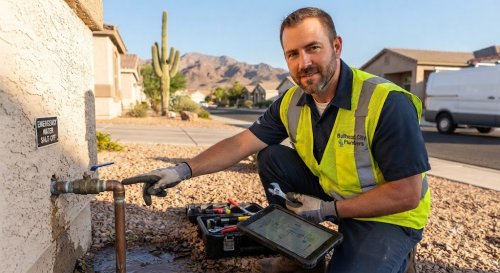
Homeowners can test overall water pressure using a simple pressure gauge that screws onto an outdoor hose bib. If the gauge reading is significantly lower than normal or fluctuates wildly when another tap is opened, the PRV or the main supply line warrants a closer look.
The Impact of Desert Heat and Hard Water
Operating a plumbing system in Bullhead City comes with specific environmental factors. High summer temperatures can increase stress on outdoor lines and expose vulnerabilities in older pipe materials. Additionally, continuous exposure to hard water accelerates scale accumulation inside galvanized steel pipes, valves, and water heaters.
If a home features older galvanized steel piping, internal mineral restriction can choke down the interior diameter of the pipe over decades, severely reducing water volume and pressure. Unfortunately, localized pipe scaling cannot be cleared out effectively with liquid drain cleaners or standard snaking; it typically requires pipe replacement.
Safe Troubleshooting Steps for Homeowners
Before assuming you need a major plumbing overhaul, run through this practical checklist:
- Check the main shutoff valve: Ensure the primary water meter valve and the main indoor shutoff valve are fully open. A valve that is only half-open will choke off supply to the entire house.
- Test multiple faucets: Compare flow rates between hot and cold sides. If low pressure occurs only on the hot water side, the issue may be isolated to the water heater inlet valve, a clogged dip tube, or sediment buildup within the tank itself.
- Inspect aerators: Remove and clean screen inserts on bathroom and kitchen faucets.
- Check with neighbors: If your whole neighborhood experiences a sudden pressure drop, the local utility provider may be performing maintenance, flushing mains, or dealing with a main line repair.
When Professional Diagnosis Is Necessary
While cleaning aerators and verifying valve positions are straightforward DIY tasks, other pressure problems require professional evaluation. If your PRV is leaking, failing, or requires adjustment, specialized tools and replacement cartridges are necessary. Similarly, diagnosing hidden underground leaks between the water meter and the home requires professional pressure testing and acoustic equipment.
Understanding how your plumbing system distributes water helps you separate minor fixture maintenance from broader supply issues, ensuring you can make informed decisions when managing your home's water pressure.