Troubleshooting Low Water Pressure in Bullhead City Homes
Learn how to diagnose and troubleshoot low water pressure in your Bullhead City home. Discover whether the issue is local to a fixture or a whole-house supply problem.

Understanding Low Water Pressure in Your Home
Dealing with a weak stream from your shower or kitchen faucet can be frustrating. When water pressure drops suddenly or gradually decreases over time, it disrupts everyday household tasks. In areas like Bullhead City, Arizona, low water pressure is a common service call, but the causes can range from simple surface-level mineral blockages to more complex supply issues.
To fix the problem effectively, you first need to determine whether the pressure drop affects a single fixture or your entire home. This distinction dictates every step of the troubleshooting process.
Is the Problem Isolated or Whole-House?
The most important initial diagnostic step is checking other water sources around your property.
- Single Fixture: If only the kitchen sink or guest bathroom shower has low pressure, the issue is almost certainly localized to that specific fixture, its supply lines, or its shutoff valve.
- Whole House: If multiple fixtures, showers, and outdoor hose bibs experience weak flow simultaneously, the restriction is happening at the main water supply, the main shutoff valve, or a central pressure-regulating component.
Checking outdoor hose connections is a quick way to test this. If an outdoor spigot directly connected to the main supply runs strong while indoor fixtures trickle, your interior plumbing requires inspection. If the outdoor spigot is also weak, the issue originates closer to the municipal supply or your property's main line.
Common Causes of Localized Pressure Drops
When a single fixture loses pressure, the culprit is usually straightforward.
1. Clogged Aerators and Showerheads
Every faucet features a small screen called an aerator at the tip, and showerheads contain internal flow restrictors or nozzles. Over time, these components catch debris, rust flakes, and hard water minerals. In the lower Colorado River region, mineral content in the water supply can leave calcium carbonate crusts inside these small openings rather quickly.
What to do: Unscrew the faucet aerator or detach the showerhead. Soak it in a small container of white vinegar for an hour, scrub gently with an old toothbrush, and rinse thoroughly before reattaching. This simple step frequently restores full flow without requiring any tools or parts.
2. Partially Closed Shutoff Valves
Underneath sinks and behind toilets, small oval or round handle valves control the water supply. If someone bumped a valve during cleaning or if it was not fully reopened after a previous repair, it will restrict water flow significantly.
Common Causes of Whole-House Pressure Drops
When the entire home experiences a pressure loss, look to major system components.
1. The Pressure Reducing Valve (PRV)
Many homes in Bullhead City utilize a Pressure Reducing Valve (PRV) installed on the main water supply line where it enters the property. This bell-shaped brass device prevents high municipal water pressure from damaging indoor plumbing appliances. When a PRV fails, it often sticks in a closed or partially restricted position, causing a sudden and dramatic drop in water pressure throughout the entire house.
2. Main Shutoff Valve Restrictions
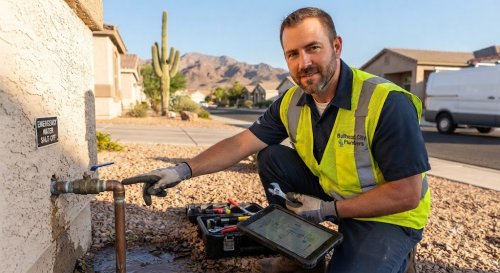
The main water shutoff valve—either located near the street inside a meter box or where the main line enters the foundation—may be partially closed, or a gate valve internal mechanism may have broken loose, blocking the internal waterway.
3. Mineral Accumulation in Galvanized Piping
Older homes built with galvanized steel pipes face internal corrosion and mineral scaling. Over decades, the inner diameter of the pipe constricts like narrowed arteries, choking down water volume and pressure. If your home has older metal piping, a whole-house pressure drop often points to advanced internal pipe constriction.
Warning Signs of Underlying Plumbing Stress
Sometimes low pressure is a symptom of a larger, hidden issue. Pay attention to these accompanying signs:
What to Check Before Calling a Professional
Before spending money on service calls or replacement hardware, homeowners can safely perform these basic checks:
- Verify that the main water meter valve and individual fixture shutoff valves are fully open.
- Inspect visible exposed pipes for signs of active leaks or dampness.
- Clean all sink aerators and showerheads to eliminate mineral blockages.
- Ask neighbors if they are experiencing similar pressure drops, which can indicate temporary municipal utility work or main line repairs in your neighborhood.
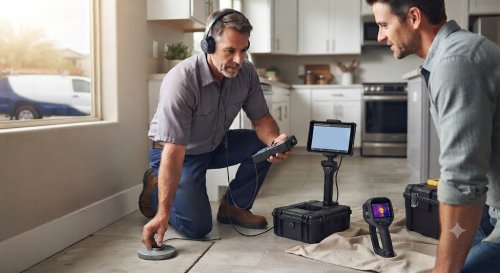
If these checks reveal no obvious faults, or if adjusting valves and cleaning aerators yields no improvement, a professional diagnostic evaluation using pressure gauges is usually necessary to pinpoint whether the issue stems from a failing PRV, underground line damage, or internal piping deterioration.
Conclusion
Low water pressure is rarely a mystery once you systematically isolate whether the restriction affects a single outlet or the entire plumbing system. By checking aerators, validating valve positions, and observing how your home's plumbing behaves under simultaneous use, you can identify many minor issues independently and make informed decisions when specialized repairs are required.