Why Professional Leak Detection
Hidden water leaks can cost you thousands. Learn how professional leak detection in Bullhead City, AZ finds problems fast & saves your home from expensive damage.

Introduction
Imagine opening your water bill and seeing a number that's double what it normally is. You haven't changed your habits. There's no obvious puddle on the floor. It's a mystery—and an expensive one.
This scenario plays out daily in homes across Bullhead City. Non-weather-related water losses are the number-one source of property damage for homeowners, with plumbing systems being one of the top causes. A small pinhole leak in a pressurized pipe can waste more than 3,000 gallons per day, adding up to over 90,000 gallons lost every single month.
Many leaks develop silently behind walls, under floors, or beneath concrete slabs. You might not see the damage happening. But the structural damage to your home and the ever-rising water bill are real, and they get worse with every day that passes.
You might be wondering if that random musty smell is normal. Or maybe you've noticed a soft spot in the floor that wasn't there before. Perhaps you can hear a faint trickle of water when all the taps are off. These are not small problems. They are warning signs that warrant immediate attention. The good news is that professional leak detection can identify the source of these problems quickly and non-invasively, saving you from a devastating financial hit.
What Is Professional Leak Detection?
Professional leak detection is a specialized plumbing service that uses advanced technology to locate hidden water leaks without destroying your property. It is a preventative and diagnostic service that finds the source of water loss before it becomes a major catastrophe.
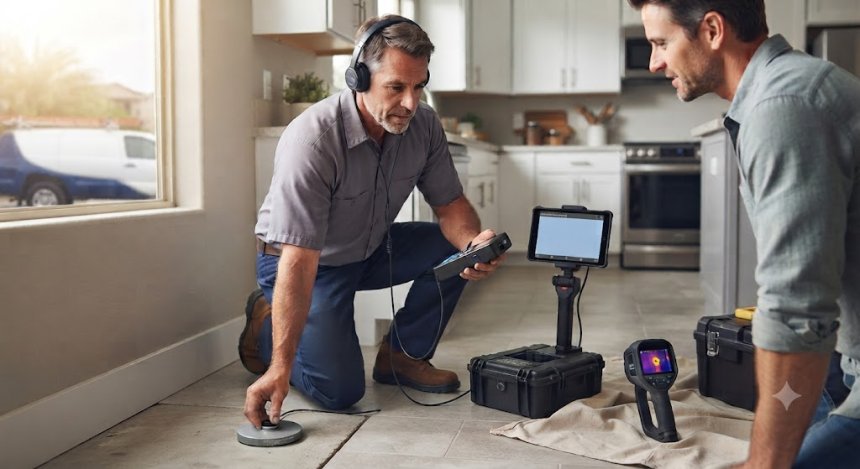
Think of it as a medical scan for your home's plumbing system. Instead of tearing open walls and digging up floors to find a problem, a trained professional uses sensitive listening devices, thermal imaging cameras, and specialized gas tracers to pinpoint the exact location of the leak. The goal is to identify the specific point of failure so repairs are precise and minimally invasive.
Common Situations Where You Need It
This service is invaluable in several scenarios, especially common in homes in our region:
-
Slab Leaks: For homes built on concrete slabs, copper pipes can corrode where they run through or beneath the concrete. This causes water to leak directly into the soil under your home, potentially causing foundation damage without any visible signs indoors.
-
Leaks Behind Walls: A leak inside a wall can saturate drywall, insulation, and wooden studs. You might see a slight discoloration or bubbling paint, or maybe you smell a mysterious musty odor.
-
Underground Leaks: These can occur in the service line between the water meter in your yard and your home or in sprinkler systems. They are nearly impossible to find without the proper equipment.
-
High Water Bills: When your water bill spikes inexplicably, it's often the first sign of a hidden leak. Professional detection can confirm if the meter reading is accurate and where the excess water is going.
Why Does This Plumbing Problem Happen?
Your home's plumbing system is a network of pipes under constant pressure. Over time, several factors can compromise its integrity, leading to leaks. Understanding why leaks occur can help you appreciate the value of early detection.
Common Causes
-
Aging Pipes: Just like any other part of your home, pipes have a lifespan. Over decades, they weaken, corrode, and develop pinhole leaks. If your home is older, the risk is significantly higher.
-
Corrosion: The chemical makeup of your water can react with metal pipes, causing them to rust and thin out from the inside. This is particularly common with copper and galvanized steel pipes.
-
High Water Pressure: Water pressure that is too high puts unnecessary stress on your entire plumbing system, straining joints and increasing the likelihood of a burst or pinhole leak at a weak point.
-
Tree Roots: Tree roots are naturally drawn to moisture. They can infiltrate the smallest cracks in your underground sewer or water lines. As they grow, they cause blockages and can crack the pipe wide open.
-
Improper Installation: A pipe fitting that wasn't soldered correctly, a joint that wasn't glued properly, or pipes that weren't securely fastened can all lead to premature failure.
-
Hard Water: This is a common issue in Arizona. The minerals in hard water can cause scale buildup inside pipes. This restricts water flow, increases pressure, and accelerates corrosion.
Signs You Should Never Ignore
Here are the key indicators that a hidden leak is plaguing your home. Don't wait for these signs to worsen. If you notice any of the following, it's time to pick up the phone.
-
Unexplained High Water Bills: This is often the first red flag. If your water usage hasn't changed but your bill has jumped 30% or 40%, you likely have a leak.
-
The Sound of Running Water: If you can hear water running when all fixtures are off, there is water leaving your system somewhere.
-
Damp Walls, Floors, or Ceilings: Stains, bubbling paint, or warped flooring are classic signs of water intrusion. Remember, the stain isn't always directly below the leak source; water often travels before it becomes visible.
-
Mold or Musty Odors: A persistent musty smell is a major clue. It indicates mold growth, which requires moisture to thrive. This is a sign that moisture is present behind your walls or under floors, representing a significant health hazard.
-
Soft Spots in Flooring: A spongy feel under your feet, especially on a tile or wood floor, suggests the subfloor has been compromised by water damage.
-
Cracks in the Foundation: A slab leak can wash away the soil under your foundation, causing the concrete to settle and crack.
-
Peeling Paint or Wallpaper: Moisture can break down the adhesive, causing paint to bubble and wallpaper to peel away from the wall.
-
Gurgling Sounds: If you hear a gurgling sound from a drain or toilet when another fixture is in use, it indicates trapped air in the line, often a sign of a blockage in your sewer system that could lead to a backup.
How to Find a Hidden Water Leak
You can do a bit of detective work to confirm whether you have a leak.
The Water Meter Test
This is the most reliable DIY method.
-
Turn Everything Off: Ensure all faucets, showerheads, and water-using appliances (dishwasher, washing machine, ice maker) are off. This includes your irrigation system.
-
Find Your Water Meter: This is usually located in a concrete box in your front yard near the street.
-
Check the Leak Indicator: Most modern meters have a small dial or a triangle that spins when water is flowing. If the indicator is moving, you have a leak.
-
Perform the "Wait and See" Test: For a more definitive test, note the reading on the meter, wait 1-2 hours without using any water, and check it again. If the reading has changed, you have an active supply-side leak.
The Isolation Method
This method uses the meter test to determine where the leak is located. After you perform the meter test and confirm water is flowing:
-
Shut off your home's main water valve. If the indicator on the meter stops, the leak is inside your home. If it keeps moving, the leak is likely in the service line or irrigation system.
-
Turn off your irrigation system's shut-off valve. If the indicator stops, the leak is in your yard lines.
-
If it still moves, the leak is in the service line between the meter and your house, which requires a professional.
Common Plumbing Problems Related to Hidden Leaks
A hidden leak is often a symptom of a larger plumbing issue. Some related problems include:
-
Slab Leaks: As mentioned, these occur when pipes beneath a concrete foundation leak, causing structural damage and high water bills.
-
Burst Pipes: Often caused by freezing, high water pressure, or corrosion, a burst pipe results in a sudden, catastrophic flood.
-
Sewer Line Backups: Tree roots, grease, or debris blocking the sewer line can cause raw sewage to back up into your home. This is not just a leak; it's a health emergency.
-
Fixture Damage: Leaks can cause water damage to your sinks, faucets, and toilets, shortening their lifespan.
Step-by-Step Professional Leak Detection Process
When you call a licensed plumber for leak detection, here's what you can typically expect.
-
Step 1: Comprehensive Inspection: The plumber will discuss your water bill, inspect visible fixtures, and ask about the symptoms you've observed (musty smells, stains, etc.).
-
Step 2: Advanced Diagnostics: This is where the specialists come in. They will employ a variety of non-invasive tools to pinpoint the leak.
-
Step 3: Accurate Diagnosis: After reading the equipment, the plumber can tell you the exact location of the leak and the likely cause.
-
Step 4: Repair Estimate: Before any work begins, you will receive a clear, detailed estimate for the repair, including material and labor costs.
-
Step 5: Targeted Repair: The plumbing professional will then perform the necessary repair, which is usually a small, localized fix—not a whole-house dig.
-
Step 6: Testing: Once the repair is made, the team will test the line to ensure the leak is fixed and the water pressure is normal.
-
Step 7: Cleanup and Maintenance Advice: The work area is cleaned up. The plumber will also offer guidance on how to prevent similar issues in the future.
Tools Professionals Use
Here are some of the sophisticated tools that professional leak detection experts use. These tools are what make the service so precise and cost-effective.
-
Acoustic Listening Devices: These are the most common tools. They use highly sensitive microphones to "listen" for the distinct sound of water escaping from a pressurized pipe. These devices are so sensitive they can pick up frequencies inaudible to the human ear, even through concrete and thick soil.
-
Thermal Imaging Cameras: These detect temperature variations behind walls and under floors. Water evaporating from a leak cools the surface, creating a thermal signature that shows up on the camera.
-
Tracer Gas Leak Detection: This involves injecting a harmless, non-toxic gas (like hydrogen or helium) into the water line. The gas escapes through the leak, and a sensor above the ground can trace the gas to the exact point of the leak, even through concrete.
-
Pipe Locators: These use radio frequencies to trace the path of metal pipes, helping the plumber map out the route and confirm the location of the leak.
-
Pipe Inspection Cameras: These small, waterproof cameras are sent down a drain line to inspect the interior of the pipe. They can visually identify cracks, blockages, and tree root intrusion.
How Long Does the Repair Usually Take?
The timeline depends heavily on the location and severity of the problem:
-
Simple Repairs: A leaky pipe behind a wall that is easily accessed might take 1-3 hours.
-
Moderate Repairs: A slab leak or a leak behind a finished wall may take 3-6 hours, as it involves more careful access and repair.
-
Major Repairs: Major sewer line repairs or trenchless pipe replacements may take a full day or more.
-
Emergency Repairs: Emergency visits often take 1-2 hours to get the water under control and stop the immediate damage.
Cost Factors
Plumbing repair costs vary depending on the severity of the problem, accessibility, materials required, emergency service, property type, and local labor rates.
Here are the primary factors a plumber considers when estimating a job:
-
Diagnostic Fees: The cost to perform the leak detection itself.
-
Parts and Labor: Standard per-hour rates and the cost of replacement fittings and pipes.
-
Emergency Service Charges: After-hours or weekend calls typically carry a surcharge.
-
Equipment Needed: Specialized equipment like a sewer camera may add to the cost.
-
Permit Costs: Some repairs, especially those involving sewer lines or water mains, may require a city permit.
-
Repair vs. Replacement: In some cases, it's more cost-effective and practical to replace a section of pipe rather than attempt a repair.
Hidden Truths Homeowners Should Know
-
Small Leaks Become Expensive Repairs: The worst time to find out you have a leak is after the floor caves in or the mold remediation truck arrives.
-
Cheap Temporary Fixes Often Fail: "Leak tape" or "stop-leak" liquids are a gamble. They rarely last and can often clog valves and other plumbing components.
-
Insurance May Not Cover Neglected Plumbing: Homeowner's insurance often covers "sudden and accidental" damage, not damage from a long-term, untreated leak. Delaying a repair could mean paying the entire cost out of pocket.
-
Tree Roots Can Cause Repeated Damage: If a sewer line is damaged by roots, simply clearing the blockage is not enough. The root-infested pipe must be repaired or replaced.
-
Hard Water Shortens Fixture Lifespan: The scale from hard water builds up quickly, leading to early failure of water heaters, faucets, and appliances.
-
DIY Mistakes Increase Repair Costs: Soldering a copper pipe without the proper skill can cause a larger, more expensive leak.
-
Delaying Repairs Causes Structural Damage: Water can rot wooden studs, weaken floor joists, and even damage a home's foundation. This is one of the most expensive types of property damage.
-
Hidden Leaks Increase Utility Bills: These leaks can cause your water bill to spike to hundreds of dollars a month.
-
Mold Develops Quickly: Mold can start growing within just 24-48 hours of water exposure.
15 Common Mistakes Homeowners Make
-
Ignoring a slow drip: It's not just water; it's money and structural integrity being drained away.
-
Using chemical drain cleaners: These can damage the interior of your pipes, especially older ones.
-
Flushing "flushable" wipes: They don't disintegrate like toilet paper and are a leading cause of sewer blockages.
-
Pouring grease down the drain: This cools and solidifies in your pipes, creating a massive blockage over time.
-
Ignoring high water pressure: Too much pressure can cause pinhole leaks or blow out your plumbing.
-
Hiring unlicensed plumbers: A cheap job can quickly become an expensive nightmare without the right insurance and certification.
-
Skipping annual maintenance: Most homes never get a plumbing checkup, which is a huge mistake.
-
Waiting until an emergency: An inspection before the problem arises is far cheaper.
-
Using the wrong pipe materials: Mixing metals or using the wrong type of pipe for an application can lead to early failure.
-
Over-tightening fittings: This can crack the fitting or pipe, creating a leak.
-
Not knowing where the main water valve is: This is critical for stopping a flood.
-
Failing to replace appliance hoses: A burst washing machine hose can cause thousands of dollars of damage.
-
Ignoring "minor" water stains: That stain is a sign of past or current moisture intrusion.
-
Patching a pipe instead of replacing it: A patch isn't a fix. It's a Band-Aid that will likely fail.
-
Not calling a pro when stumped: The problem is still there, getting worse.
Maintenance Tips to Prevent Water Damage
Prevention is always cheaper than the cure.
-
Insulate Pipes: Protect your pipes from freezing during Arizona's winter months.
-
Exercise Shut-off Valves: Turn the main water valve and individual fixture valves on and off a few times annually to prevent them from seizing up.
-
Replace Appliance Hoses: As a rule, replace the hoses to your washing machine and dishwasher every 5 years.
-
Monitor Your Water Bill: A month-over-month increase is often the first sign of a problem.
-
Don't Pour Grease Down the Sink: Dispose of cooking grease in a can in the trash.
-
Clean Your Gutters: Proper drainage diverts water away from your foundation to prevent leaks.
-
Maintain Your Hot Water Heater: Flush your water heater annually to remove sediment and replace it when it's 10-15 years old.
-
Schedule a Professional Inspection: Have a licensed plumber inspect your home's plumbing every 2-3 years.
When Should You Call an Emergency Plumber?
Some problems can wait for business hours. These cannot. Call immediately if you have:
-
Burst pipes: If water is actively gushing into your home, shut off the main water valve and call a plumber right away.
-
Sewage backup: This poses a major health risk and requires immediate professional attention to stop the contamination and clean it up.
-
No running water: This indicates a significant failure in the water supply to your home.
-
Overflowing toilet: If a toilet is overflowing and cannot be stopped, turn off the valve behind the toilet or shut off the main water line.
-
Flooding: Any significant amount of water entering your home requires an immediate response to stop the flow and begin cleanup.
Frequently Asked Questions
-
Why is my water pressure suddenly low?
-
A sudden drop in water pressure is often a sign of a hidden pipe leak, a mineral buildup in your pipes, or a problem with the municipal water supply.
-
-
How much does leak detection cost?
-
Can a clogged drain damage pipes?
-
Yes. A severe clog can increase pressure, forcing water to back up and potentially cracking pipes, leading to leaks.
-
-
Is hydro jetting safe for old pipes?
-
Not always. Hydro jetting uses high-pressure water that can damage fragile, aging pipes. A camera inspection should always be done first.
-
-
How do I know if my sewer line is broken?
-
Signs include multiple drains backing up simultaneously, gurgling sounds from toilets, sewer odors, and patches of overly green grass in your yard.
-
-
How long do water heaters last?
-
With proper maintenance, a traditional tank water heater typically lasts 8-12 years. A tankless water heater can last up to 20 years.
-
-
Why does my faucet drip?
-
A dripping faucet is most often caused by a worn-out washer or a corroded valve seat in the faucet assembly.
-
-
What causes pipes to burst?
-
The most common causes are freezing temperatures, very high water pressure, and severe corrosion weakening the pipe walls.
-
-
Can plumbing leaks increase my water bill?
-
When should I replace plumbing instead of repairing it?
-
If a pipe has extensive corrosion, has failed multiple times, or if you have an older home with original plumbing, repiping might be a more sound long-term investment than repeated repairs.
-