Common Causes of Low Water Pressure in Bullhead City Homes
Discover why your Bullhead City home has low water pressure. Learn how to troubleshoot local hard water scaling, pressure regulators, and fixture issues safely.


Understanding Low Water Pressure in Your Home
Experiencing a weak stream from your showerhead or kitchen faucet can be immensely frustrating. When water pressure drops suddenly or fades gradually over time, it disrupts daily routines and can point to underlying issues within your plumbing system or the municipal supply. In an area like Bullhead City, Arizona, local environmental factors and regional water characteristics often play a significant role in how residential plumbing performs.
The first step in addressing low water pressure is determining whether the issue affects a single fixture or the entire house. This simple distinction narrows down the possibilities dramatically, helping you identify whether you are dealing with a localized restriction or a whole-home supply problem.
Single-Fixture vs. Whole-House Low Pressure
Before assuming your entire plumbing system is failing, check multiple faucets and showers around your home:
- Single-Fixture Issue: If only one sink or shower has weak pressure while the rest of the house flows normally, the problem is almost certainly isolated to that specific fixture, its supply lines, or its shutoff valve.
- Whole-House Issue: If every faucet, shower, and hose bib across the property suffers from reduced flow, the root cause lies somewhere in the main water supply line, the main shutoff valve, the pressure regulator, or the municipal supply.
Common Causes of Localized Pressure Drops
When a single fixture loses pressure, the culprit is usually straightforward and relatively easy to inspect or clean.
1. Clogged Aerators and Showerheads
In Bullhead City, the local water supply carries a high mineral content, commonly referred to as hard water. As water evaporates at the tip of a faucet or the face of a showerhead, it leaves behind calcium and magnesium deposits. Over time, this mineral buildup restricts the tiny exit holes, choking off water flow and altering the spray pattern.
What you can check: Unscrew the aerator from the end of the faucet spout. If you see white, crusty mineral buildup inside the screen, soak it in a small container of white vinegar for an hour or two. The acid in the vinegar dissolves the calcium carbonate, restoring full flow without requiring replacement parts.
2. Partially Closed Shutoff Valves
Underneath sinks and behind toilets, individual shutoff valves control the water supply to each fixture. If someone bumped a valve during cleaning or maintenance, or if an older multi-turn valve has slipped internally, it may be partially closed, severely restricting water volume.
What you can check: Locate the shutoff valves beneath the affected fixture and ensure they are turned fully counterclockwise into the open position.
Common Causes of Whole-House Pressure Drops
If every outlet in your home is running weak, the problem requires looking at the main components where water enters the house.
1. Pressure Reducing Valve (PRV) Failure
Most homes in the region are equipped with a Pressure Reducing Valve (PRV), usually located near the main water shutoff where the supply line enters the property. This device lowers the high pressure coming from the municipal water main down to a safe, manageable level for household pipes and appliances (typically between 50 and 70 psi).
Over time, internal springs fatigue, rubber diaphragms tear, or mineral scale jams the internal mechanism. When a PRV fails, it often fails closed or severely restricts water passage, causing a sudden and dramatic drop in pressure throughout the entire house. If adjusting the top bolt on the PRV does not restore pressure, the internal cartridge has likely reached the end of its lifespan and requires replacement.
2. Mineral Buildup in Galvanized or Aging Pipes
While newer homes utilize copper or cross-linked polyethylene (PEX) piping, older properties may contain galvanized steel pipes. Over decades of exposure to mineral-rich water, the interior diameter of galvanized pipes gradually shrinks due to internal rust and scale accumulation. This constriction chokes down the volume of water that can travel through the pipes, resulting in poor flow even if the water pressure at the main entry point is technically normal.
3. Main Shutoff Valve Restrictions
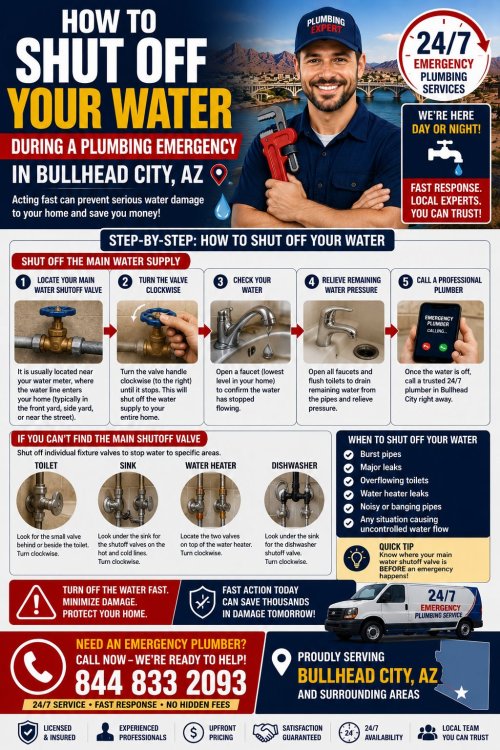
Both the municipal water meter shutoff and your home's main interior shutoff valve must be completely open. If either valve is only partially open, or if an older gate valve has broken internally—where the gate drops independently of the handle—it will choke the water supply to the entire building.
When to Inspect and When to Seek Professional Diagnosis
Homeowners can safely handle simple maintenance tasks like cleaning faucet aerators, soaking showerheads in vinegar, and verifying that shutoff valves are fully open. However, working on main water lines, replacing a faulty Pressure Reducing Valve, or diagnosing underground leaks requires specialized plumbing tools, such as pressure gauges and pipe wrenches.
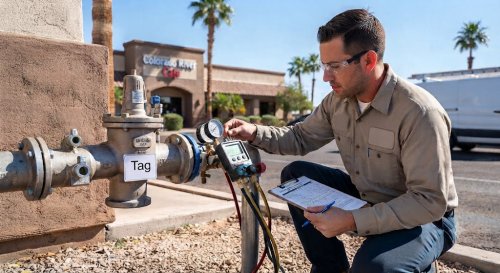
If you have cleaned your fixtures, verified that your main valves are fully open, and still experience unacceptably low water pressure, a professional assessment may be necessary. A plumber can attach a pressure gauge to an outdoor hose bib to accurately measure static and dynamic water pressure, helping determine whether the restriction originates from the municipal supply line, a failing PRV, or internal pipe corrosion.
Practical Prevention and Maintenance Takeaways
Because mineral scale is an ongoing factor in residential plumbing across arid Southwestern regions, proactive maintenance makes a noticeable difference:
- Routine Descaling: Periodically soak removable faucet aerators and showerheads in vinegar to prevent mineral choking.
- Water Treatment Considerations: Some homeowners install whole-house water softeners to mitigate mineral buildup across all plumbing fixtures and appliances, though system sizing and maintenance are critical.
- Monitor Changes: Pay attention to whether pressure loss happens suddenly—which often points to a valve failure or main line restriction—or creeps in slowly over several years, which usually indicates mineral scale accumulation.
Understanding how water flows through your home empowers you to troubleshoot basic restrictions safely, avoid unnecessary panic, and communicate effectively if a professional repair becomes necessary.