Backflow Prevention Testing:
ullhead City backflow testing guide. Learn why annual testing is required, how it protects your business, costs, and what happens if you ignore it.

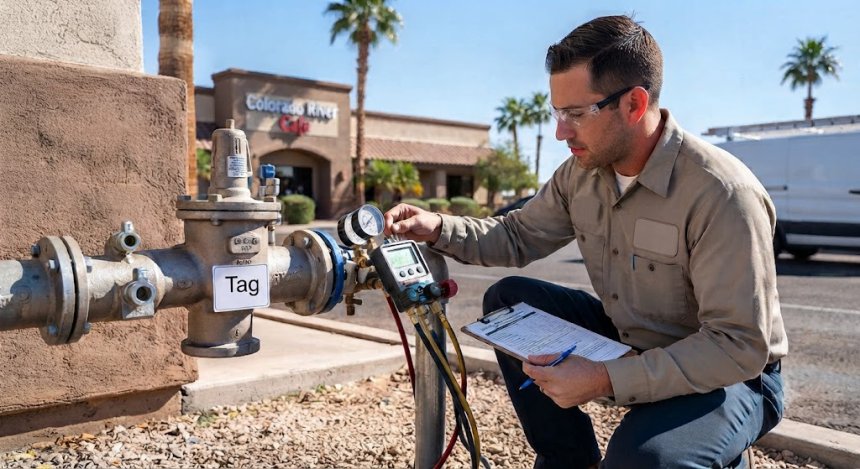
Backflow Prevention Testing: What Bullhead City Business Owners Need to Know
Imagine this: You're running your Bullhead City business—a restaurant, a salon, or an office building. Everything seems fine. Then you get a notice from the city or county requiring backflow prevention testing. Or worse, you discover contaminated water has backflowed into your building's clean water supply.
Backflow prevention isn't the most glamorous topic, but it's one of the most critical aspects of commercial plumbing. It protects your employees, your customers, and your community from serious health risks. In this guide, we'll cover everything Bullhead City business owners need to know about backflow prevention testing, why it matters, and how to stay compliant.
What Is Backflow Prevention?
Backflow is exactly what it sounds like—water flowing backward through your plumbing system. Normally, water flows in one direction from the municipal supply into your building. But when conditions change, that flow can reverse. And when it does, contaminated water from your building can mix with the clean water supply.
Think of it like a straw. When you drink, water flows up. If you blow into the straw, water goes back down. The same principle applies to plumbing.
How Backflow Happens
Two conditions can cause backflow:
Backpressure: This occurs when the pressure in your building's plumbing system exceeds the pressure from the municipal water supply. It can happen if a pump is connected to your system or if your building has a boiler or other pressure-generating equipment. The higher pressure pushes water backward.
Backsiphonage: This happens when there's a drop in pressure in the municipal water supply, creating a vacuum effect. A burst main, firefighting activity, or high demand elsewhere can cause this. The vacuum sucks water back through your pipes—and if that water is contaminated, it enters the public water supply.
How Backflow Prevention Devices Work
Backflow preventers are mechanical devices installed at specific points in your plumbing system. They create a physical barrier that allows water to flow only one direction. Common types include:
-
Reduced pressure zone (RPZ) assemblies: These are the most reliable for high-hazard situations. They have two check valves and a relief valve to vent water if pressure drops.
-
Double check valve assemblies: These have two check valves and are suitable for low-to-moderate hazard situations.
-
Pressure vacuum breakers: These allow air into the system to prevent backsiphonage.
-
Atmospheric vacuum breakers: Simple devices that use air to break the siphon.
Commercial backflow preventers, such as RPZ and double check valves, are typically larger and more complex than residential versions. They often include test cocks—small valves used to test the device's performance.
Why Backflow Prevention Testing Is Required
Backflow prevention devices protect the public water supply from contamination. When they fail, the consequences can be severe.
In Arizona, state and local regulations require backflow preventers to be tested annually. The Arizona Department of Environmental Quality (ADEQ) and local municipalities like Bullhead City enforce these regulations. Commercial properties, multifamily housing, fire protection systems, and any facility with a potential contamination hazard are typically required to test.
A cross-connection—any point where the drinking water supply could be connected to a non-potable source—creates the risk. Common examples include irrigation systems, fire sprinkler systems, commercial kitchens, and chemical feed lines in industrial buildings.
Without annual testing, you risk:
-
Health department citations and fines
-
Water service interruption
-
Liability for contaminating the public water supply
-
Damage to your business reputation
A certified backflow tester must perform the tests. These professionals have special training and carry a certification. In Bullhead City, you'll find plumbers with cross-connection control certification.
Warning Signs Your Backflow Preventer May Be Failing
Backflow preventers often fail silently. You might not notice a problem until a test reveals it. However, there are some warning signs you can watch for:
-
Water pressure fluctuations: If water pressure suddenly drops or surges, it could indicate backflow preventer issues.
-
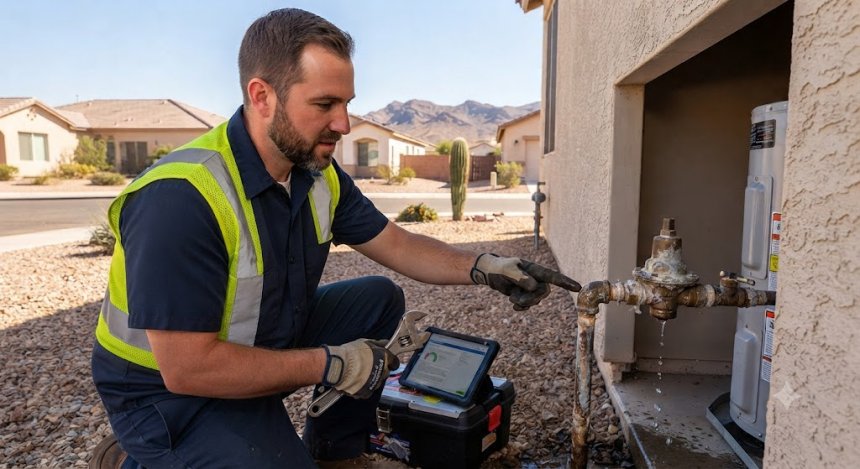
Visible leaks: Water pooling around the backflow device suggests a failed seal or valve.
-
Discolored water: Brown, yellow, or cloudy water could indicate contamination.
-
Unusual tastes or odors: Chlorine, chemical, or earthy smells in your drinking water are cause for concern.
-
Sewage or chemical odors: If you smell these, contamination may already have occurred.
-
Health symptoms: Unexplained gastrointestinal illness among staff or customers warrants immediate investigation.
Common Plumbing Problems Related to Backflow
Backflow issues don't exist in isolation. They're often connected to broader plumbing problems.
Pressure imbalance: High or low water pressure can stress backflow preventers. High pressure—often caused by improper pressure regulator settings or thermal expansion—can force devices to malfunction. Low pressure from a water main break can cause backsiphonage.
Corroded check valves: Over time, internal components corrode due to mineral content in water. Hard water—common in Bullhead City—accelerates this.
Debris in the system: Sediment, rust, or other debris can lodge in valves, preventing them from sealing properly.
Damaged seals and O-rings: Rubber seals wear out with age and temperature changes.
Freezing: In the rare event Bullhead City experiences freezing temperatures, water in a backflow preventer can freeze and crack the device.
Step-by-Step Backflow Prevention Testing Process
When a certified tester arrives, here's what they'll do.
Step 1: Assessment
The tester will identify the type and make of your backflow preventer, locate any downstream isolation valves, and ensure the tester can access the test cocks.
Step 2: Setup
They'll close the downstream isolation valve first, then the upstream valve. This isolates the device for testing. Then they'll remove the caps from the test cocks and connect a backflow testing kit. This kit measures pressure differences.
Step 3: Testing
The tester will:
-
Open the test cocks and observe the gauge readings.
-
Check each check valve for proper sealing.
-
Test the relief valve (on RPZ assemblies) to ensure it opens at the correct pressure.
-
Record all readings.
Step 4: Evaluation
If the device passes, the tester will document the results and submit a report to the local water authority. If it fails, the tester will identify which component needs repair or replacement. For a commercial backflow preventer, a failed test might require replacing the internal check valves, rebuilding the device, or installing a new assembly.
Step 5: Repairs and Retesting
If repairs are needed, a licensed plumber will perform them. After repairs, the device must be retested to confirm it works properly. The final test report is submitted to the authority.
Step 6: Documentation
You'll receive a copy of the test report. Keep this for your records. It shows you've complied with regulations.
Can You Test Backflow Preventers Yourself?
No. In almost all jurisdictions, only certified backflow testers can perform the test. The certification process ensures the tester knows the devices, the test procedures, and the regulations. Attempting to test your own device could damage the device, risk contamination, and fail to meet legal requirements.
However, you can do some things to help.
Safe DIY Steps for Business Owners
-
Visual inspections: Check your backflow preventer for visible leaks, corrosion, or damage.
-
Know your device: Keep a record of the make, model, and installation date.
-
Clear the area: Ensure the area around your backflow preventer is accessible for the tester.
-
Water pressure checks: Monitoring your building's water pressure can alert you to potential issues.
-
Watch for warning signs: Water discoloration, pressure changes, or odors should be reported to a plumber.