Troubleshooting Low Water Pressure in Bullhead City Homes
Learn how to diagnose and troubleshoot water pressure issues in your Bullhead City home. Understand the causes behind mineral buildup, PRV failures, and leaks.

Understanding Water Pressure Problems in Your Home
Dealing with sudden or gradual low water pressure can turn a simple morning routine into a frustrating experience. When water sputters from a showerhead or takes twice as long to fill the kitchen sink, the root cause can range from a simple clogged aerator to a failing pressure-reducing valve (PRV). In Bullhead City, the local environment—characterized by intense summer heat and mineral-heavy groundwater—adds a few unique variables to how residential plumbing systems behave over time.
Before you jump to conclusions or assume your entire plumbing infrastructure is failing, a systematic troubleshooting approach can help you pinpoint whether the restriction is localized to a single fixture or affecting the entire house.
Is the Problem Isolated or Whole-House?
The very first step in diagnosing water pressure issues is determining the scope of the problem. Walk through your home and test multiple faucets, showers, and hose bibs.
- Isolated to one fixture: If only the kitchen sink or a single bathroom faucet has low pressure while the rest of the house flows normally, the issue is almost always restricted to that specific fixture. Common culprits include clogged aerators, partially closed supply valves under the sink, or kinked supply lines.
- Affecting the whole house: If every fixture, shower, and outdoor spigot exhibits weak flow, the problem lies within your home's main supply line, the main shutoff valve, or the municipal supply.
Common Causes of Localized Pressure Drops
If your pressure drop is confined to one or two locations, you can usually investigate and resolve the issue without professional tools.
Clogged Aerators and Showerheads
Mineral accumulation is a frequent offender in homes utilizing hard water. Over time, calcium and magnesium deposits build up inside faucet aerators and showerhead nozzles, physically restricting water flow. Unscrewing a faucet aerator or soaking a showerhead in a mild descaling solution often restores full pressure instantly. If you notice white, crusty buildup around your fixtures, mineral deposits are the primary suspect.
Partially Closed Shutoff Valves
Underneath sinks or behind toilets, individual shutoff valves control water flow. If someone recently performed maintenance or if a valve was bumped, it may not be fully open. Ensure that all supply valves are turned counterclockwise as far as they will go to allow maximum flow.
Common Causes of Whole-House Pressure Drops
When the entire home suffers from poor water pressure, the underlying mechanical or structural components require closer evaluation.
Pressure-Reducing Valve (PRV) Failure
Most homes in the region are equipped with a pressure-reducing valve installed near the main water line entry point. This device regulates the high pressure coming from the municipal water main down to a safe level for household pipes, typically between 50 and 70 psi (pounds per square inch).
Over time, internal springs fatigue, rubber diaphragms tear, or mineral debris jams the internal mechanism. When a PRV fails, it often restricts flow severely, causing a sudden drop in whole-house pressure. Conversely, a failing PRV can sometimes stick open, allowing dangerously high pressure to surge through your plumbing and strain your appliances.
Main Shutoff Valve Restrictions
Check the main water shutoff valve where the supply line enters your home or property. If it is a gate valve, the internal gate can sometimes detach from the stem and drop into the closed position even when the external handle appears to be open. Quarter-turn ball valves are less prone to this mechanical failure, but they should still be verified as fully open.
Hidden Leaks
If your water pressure dropped gradually without an obvious mechanical failure, a hidden leak in the supply piping might be diverting water before it reaches your fixtures. You can check for hidden leaks by ensuring all water inside and outside the home is turned off, then observing your water meter. If the leak indicator dial is spinning, water is escaping somewhere in the system.
What to Check Before Calling a Professional
Homeowners can safely perform a few preliminary checks to gather useful information:
- Ask immediate neighbors if they are experiencing low water pressure. If a municipal main break or maintenance is underway in your neighborhood, the utility provider is responsible.
- Check your water meter to see if the municipal supply is actively delivering water to your property.
- Inspect visible exposed pipes in the garage, crawlspaces, or utility closets for dampness, pooling water, or unusual sounds of rushing water.
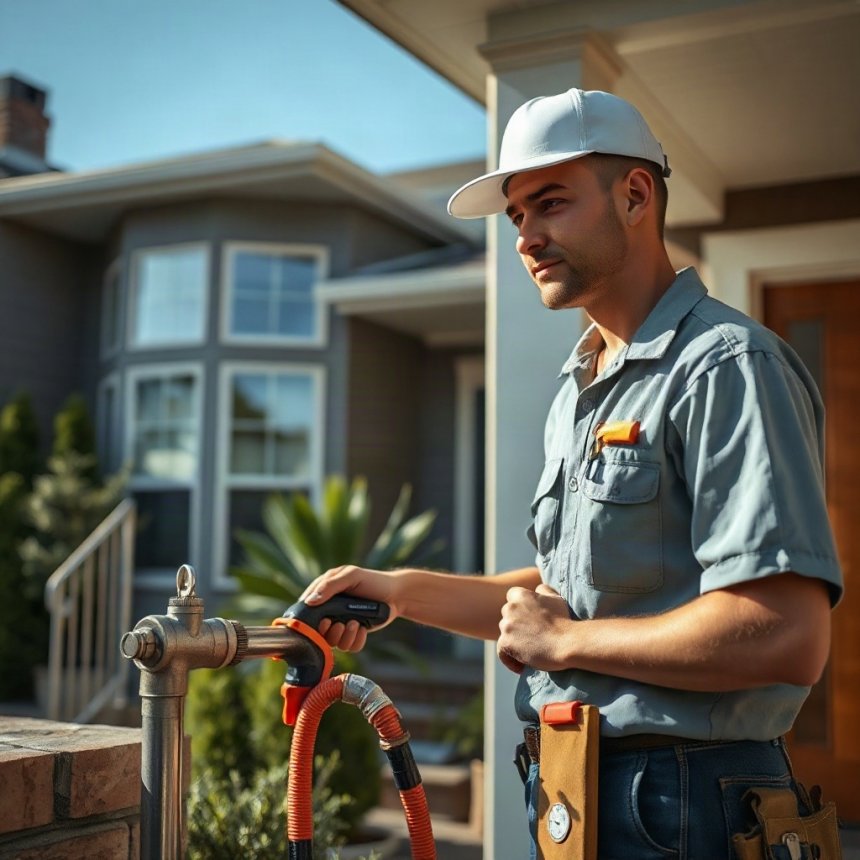
- Test the water pressure using an affordable screw-on pressure gauge attached to an outdoor hose bib. A reading significantly below normal municipal standards points directly toward a house-side restriction like a PRV.
Prevention and Long-Term Maintenance
While you cannot entirely eliminate the mineral content of regional water supplies, routine maintenance can protect your plumbing system from premature wear. Cleaning faucet aerators twice a year, periodically testing your water pressure with a gauge, and knowing the exact location of your main emergency shutoff valve will help you catch minor flow restrictions before they turn into major repair emergencies.