Troubleshooting Low Water Pressure in a Bullhead City Home
Learn how to diagnose and troubleshoot low water pressure in your Bullhead City home, from mineral-clogged aerators to pressure regulator issues.


Understanding Low Water Pressure in Your Home
Dealing with a weak stream from your showerhead or a sluggish kitchen faucet can make everyday chores frustrating. When water pressure drops, the first step toward a fix is figuring out whether the issue is isolated to a single fixture or affecting the entire house. In a desert environment like Bullhead City, Arizona, localized water pressure problems are frequently caused by mineral accumulation, while whole-house issues often point to supply line restrictions or pressure regulator faults.
By understanding how to systematically check your plumbing system, you can often identify the root cause—and in many cases, resolve it yourself without unnecessary expense.
Is the Problem Localized or Whole-House?
The single most important diagnostic step is determining the scope of the pressure drop.
- Single Fixture: If only one bathroom sink or shower is affected, the problem is almost always localized to that specific fixture, its supply lines, or its shutoff valve.
- Multiple Fixtures / Whole House: If every faucet, shower, and hose bib in the home has weak pressure, the issue originates at the main water supply, the main shutoff valve, or the pressure-reducing valve (PRV).
Common Causes of Single-Fixture Pressure Loss
If only one or two fixtures are losing pressure, you can usually troubleshoot them with basic tools and careful observation.
1. Clogged Aerators and Showerheads
Bullhead City’s municipal water supply contains dissolved minerals. Over time, calcium and magnesium precipitate out of the water, especially when heated, leaving behind a hard, crusty scale. This scale gradually chokes off the tiny openings in faucet aerators and showerhead nozzles.
How to check: Unscrew the aerator tip from the end of the faucet spout or detach the showerhead. If you see white, chalky buildup or debris trapped inside the screen, you have found the culprit.
The fix: Soak the aerator or showerhead in a small container of white vinegar for a few hours. The acid in the vinegar dissolves the mineral scale without damaging the metal finish. Once soaked, gently scrub away loosened debris with an old toothbrush and rinse thoroughly before reinstalling.
2. Partially Closed Shutoff Valves
Underneath sinks and behind toilets, angle stops (miniature shutoff valves) control the water supply. If someone bumped the valve during cleaning or if it slipped out of alignment during a repair, it may be partially closed, restricting water flow.
How to check: Look under the affected sink and ensure the oval or round handle is turned completely counterclockwise into the fully open position.
Common Causes of Whole-House Pressure Loss
When every tap in the home suffers from low pressure, the investigation moves to the main supply entering the house.
1. The Main Water Shutoff Valve
Check the main water shutoff valve where the water line enters your home—either near an exterior wall, inside a garage utility closet, or underground in a meter box near the property line. If this valve is not fully open, it throttles the volume and pressure of water entering the entire distribution system.
2. The Pressure-Reducing Valve (PRV)
Many homes feature a pressure-reducing valve, a bell-shaped brass device typically installed near the main water shutoff. The PRV regulates incoming municipal water pressure to a safe level for household pipes (usually between 50 and 80 psi).
Over years of continuous operation, the internal springs and rubber diaphragms inside a PRV wear out or become clogged with sediment. When a PRV fails, it often fails in the closed position, causing a sudden or progressive drop in water pressure throughout the house. Adjusting the top bolt on a failing PRV rarely provides a permanent fix; when internal components degrade, replacement by a qualified professional is usually required.
3. Mineral Accumulation in Galvanized Piping
While newer homes feature PEX or copper plumbing, older properties in the region may still contain galvanized steel water supply lines. Over decades, mineral scale builds up on the interior walls of galvanized pipes, shrinking the inner diameter until water can barely trickle through. If your home has older metal piping and pressure is universally poor, pipe replacement may eventually be necessary.
Diagnosing with a Pressure Gauge
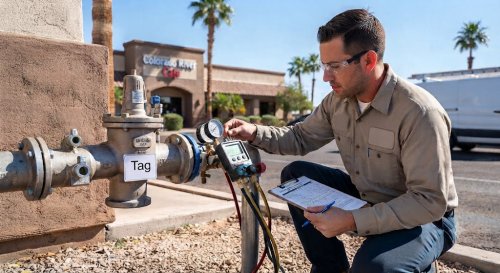
If you want to know your exact water pressure, you can purchase an inexpensive water pressure gauge with a hose-thread connection from any hardware store. Screw it onto an outdoor hose bib or a laundry sink connection, turn the tap fully on, and read the dial.
- A reading below 40 psi often feels noticeably weak for everyday use.
- A reading above 80 psi is too high and can stress plumbing joints, water heater tanks, and appliance supply hoses.
- If outdoor pressure is high, but indoor pressure is low, the restriction is likely happening inside the home's distribution piping or at a specific fixture.
When to Seek Professional Assistance
While cleaning aerators and verifying valve positions are straightforward DIY tasks, other pressure issues require specialized tools and training. Contact a licensed professional if:
- Your pressure-reducing valve is leaking, visibly damaged, or failing to regulate pressure.
- You suspect a hidden water leak behind walls or under the concrete slab (which can also cause a drop in available household water volume).
- The municipal supply pressure arriving at your property meter is low, indicating a utility-side issue that requires the local water authority's involvement.
Understanding your home's water system empowers you to rule out simple maintenance items before spending money on service calls, ensuring your plumbing runs smoothly and efficiently.