Troubleshooting Low Water Pressure in Your Home: Causes & Fixes
Learn how to diagnose and troubleshoot low water pressure in your home. Discover why pressure drops happen, how to check fixtures, and when to seek professional help.


Understanding Low Water Pressure
Dealing with a sudden or gradual drop in water pressure can make everyday tasks like showering, washing dishes, and doing laundry frustrating. When water trickles out of a faucet instead of flowing steadily, the root cause can range from a simple, localized blockage in a single fixture to a larger supply issue affecting the entire property.
In regions like Bullhead City, Arizona, where mineral-heavy hard water is common, understanding how to isolate and diagnose a pressure drop can help you determine whether you can fix the issue yourself or whether you need a professional to inspect your plumbing system.
Single Fixture vs. Whole-House Pressure Drop
The very first step in troubleshooting low water pressure is determining whether the problem is isolated to one specific location or affecting every faucet and shower in the house.
- Localized Pressure Drop: If only one bathroom sink, kitchen faucet, or showerhead has low pressure while the rest of the home functions normally, the restriction is almost certainly located at that specific fixture or its immediate supply lines.
- Whole-House Pressure Drop: If multiple fixtures, appliances, and outdoor spigots simultaneously experience low pressure, the underlying cause originates further back in the plumbing system, typically at the main water shutoff valve, the water meter, or the pressure reducing valve (PRV).
Common Causes of Localized Low Pressure
When low water pressure affects only a single faucet or showerhead, the culprits are usually straightforward and easy to resolve without specialized plumbing tools.
1. Clogged Aerators
Most modern faucets feature a small screen at the tip called an aerator, designed to mix air into the water stream and reduce splashing. In areas with high mineral content, calcium and lime scale buildup can rapidly choke these tiny screens. Unscrewing the aerator tip and inspecting it for white, crusty mineral deposits is often the quickest way to restore full flow. Soaking the aerator in a small container of white vinegar for 30 minutes usually dissolves the buildup entirely.
2. Partially Closed Supply Stops
Underneath sinks, you will find small shutoff valves connected to hot and cold supply lines. If these valves have been bumped, partially turned during previous maintenance, or worn out internally, they can restrict water flow to that specific fixture. Check that both valves are opened completely counterclockwise.
Common Causes of Whole-House Low Pressure
If your entire home suffers from weak water flow, the investigation requires looking at the main service components that bring water into your property.
1. The Pressure Reducing Valve (PRV)
Municipal water lines often deliver water at high pressures that could damage residential plumbing. To prevent this, homes are typically equipped with a Pressure Reducing Valve, usually located where the main water line enters the house. Over time, the internal springs and diaphragms inside a PRV wear out, causing the valve to stick or fail. When a PRV fails completely, it often clamps down, severely restricting water flow to the entire home. Adjusting or replacing a faulty PRV requires a plumber equipped with pressure-testing gauges.
2. Main Shutoff Valve Restrictions
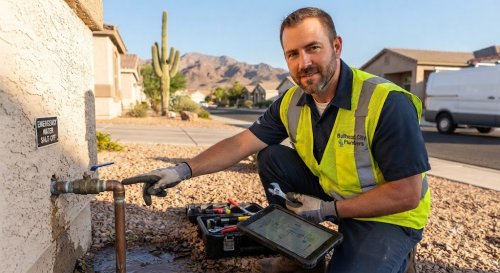
The main water shutoff valve—whether located near the street water meter or where the service line enters the foundation—may not be fully open. If plumbing work was recently performed, the valve might have been left partially closed.
3. Mineral Scale Accumulation Inside Pipes
Over years of service, dissolved minerals can coat the interior walls of galvanized steel or even copper supply pipes, gradually narrowing the diameter through which water can flow. This restriction becomes particularly noticeable when multiple fixtures are running at the same time, causing water pressure to plummet drastically.
What Homeowners Can Check Safely
Before calling for professional service, a homeowner can safely perform a few basic checks to gather useful information:
- Ask your neighbors: Check with nearby residents to see if they are experiencing similar pressure drops. If the municipal water utility is performing maintenance or experiencing a main line issue, the drop is temporary and originates outside your property.
- Inspect the main meter valve: Verify that the primary shutoff valve near your property boundary or entry point is turned completely open.
- Test multiple taps: Turn on both hot and cold water taps separately to determine if the pressure issue affects only one temperature line, which might point toward a restricted water heater inlet or outlet valve.
When a Pressure Problem Requires Professional Diagnosis
While cleaning an aerator is a simple DIY task, whole-house pressure issues often require specialized diagnostic tools. A licensed plumber will typically attach a pressure gauge to an outdoor hose bib to measure static and dynamic water pressure accurately. If the pressure reading confirms a systemic drop, testing the PRV, inspecting older pipe materials, or checking for hidden leaks becomes necessary.
Understanding whether your pressure issue is isolated to a single fixture or impacting your entire home gives you a clear starting point. By tackling simple maintenance like clearing mineral buildup first, you can often restore full water flow without unnecessary expense.