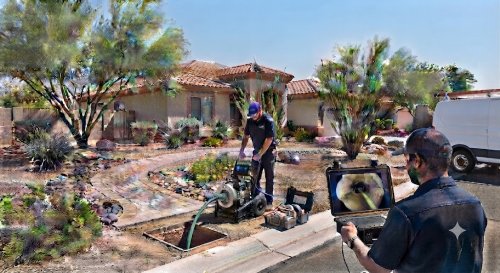
Common Causes of Low Water Pressure in Bullhead City Homes
Discover why water pressure drops in Bullhead City homes. Learn how to diagnose local hard water scale, pressure regulators, and supply issues safely.


Understanding Low Water Pressure in the Desert Climate
Experiencing a sudden or gradual drop in water pressure can make everyday tasks like showering or washing dishes frustrating. When water flow dwindles in a Bullhead City home, the cause is often tied to local environmental factors, aging infrastructure, or localized blockages within the plumbing system. Because water pressure issues can stem from several completely different sources—ranging from a single clogged fixture to a failing municipal supply line—systematic troubleshooting is required to find the exact culprit.
This guide explores the most frequent reasons for low water pressure in residential properties, helps you distinguish between isolated and whole-house pressure drops, and explains what you can safely check before making any repair decisions.
Is the Pressure Issue Isolated or Whole-House?
The very first step in diagnosing low water pressure is determining whether the problem affects a single fixture or every faucet and shower in the house.
- Isolated Fixture: If only one sink, showerhead, or toilet supply has low flow, the problem is almost always localized to that specific fixture, its supply lines, or its shutoff valve.
- Whole-House Issue: If multiple fixtures throughout the home experience weak pressure simultaneously, the root cause lies in a main supply component, a pressure-regulating valve, or the municipal water service connection.
By narrowing down the scope, you can avoid tearing apart a bathroom wall when the actual problem is a simple clogged aerator in the kitchen sink.
Common Causes of Localized Low Water Pressure
When a single tap or shower loses pressure, the fix is usually straightforward and related to physical debris or mineral accumulation.
1. Clogged Faucet Aerators
The aerator is the small screen device screwed onto the tip of most faucets. In Bullhead City, the high mineral content in the water supply means that calcium and magnesium carbonates frequently precipitate out of the water as it evaporates. Over time, these mineral crystals accumulate inside the fine mesh of the aerator, severely restricting water flow while sometimes causing the stream to spray sideways. Unscrewing the aerator and inspecting the screen is one of the easiest and most reliable first checks a homeowner can perform.
2. Partially Closed Shutoff Valves
Beneath sinks and behind toilets, local shutoff valves control water flow to individual fixtures. If a valve has been bumped, partially closed during previous maintenance, or has experienced internal stem corrosion, it will restrict the volume of water passing through. Ensuring these valves are turned fully counterclockwise to the open position can instantly restore normal pressure.
Common Causes of Whole-House Low Water Pressure
When the entire home suffers from poor water flow, the underlying causes involve major plumbing components or supply-side variables.
1. Pressure Reducing Valve (PRV) Failure
Most homes in the region are equipped with a Pressure Reducing Valve (PRV) located where the main water line enters the property. This device protects household pipes from excessive municipal pressure by stepping it down to a safe level, typically between 50 and 70 pounds per square inch (psi). Over years of continuous operation, internal springs weaken, rubber diaphragms tear, or mineral scale jams the internal mechanism. When a PRV fails, it often sticks in a closed or partially closed position, choking off the water supply to the entire home. A failing PRV can sometimes be diagnosed by attaching a water pressure gauge to an outdoor hose bib, though replacing the valve requires specialized plumbing tools and expertise.
2. Hard Water Scale Buildup in Galvanized or Copper Pipes
Bullhead City's desert environment and groundwater sources contribute to hard water conditions. Over decades, mineral deposits line the interior walls of water pipes. In older homes with galvanized steel piping, this internal scaling progresses rapidly, drastically shrinking the effective interior diameter of the pipe. Even in homes with copper PEX piping, mineral accumulation can slowly restrict flow at fitting joints, elbows, and restriction points.
3. Main Water Shutoff Valve Restrictions
The main water shutoff valve—either located near the street inside a meter box or where the service line enters the foundation—controls the flow of water into the entire property. If this valve is not fully open, or if the gate or ball mechanism inside has worn out and slipped out of alignment, it will act as a permanent bottleneck for the entire household.
External and Municipal Factors
Sometimes, low water pressure has nothing to do with private household plumbing. Utility providers occasionally perform maintenance, experience main breaks, or adjust regional booster stations. If neighbors on the same street are also experiencing a sudden pressure drop, contacting the local water utility provider is the most effective initial step before assuming the problem is internal.
What to Check Safely Before Calling a Professional
Homeowners can perform a few safe visual inspections and basic tests to gather helpful information:
- Check multiple faucets and outdoor hose bibs to confirm whether the pressure loss is general or specific.
- Inspect visible exposed pipes in the garage, utility closet, or crawlspaces for signs of active leaks or dampness.
- Verify that the main water shutoff valve and individual fixture valves are fully open.
- Remove and clean mineral deposits from fixture aerators using a mild vinegar solution to dissolve calcium scale.
Avoid attempting to adjust a PRV without a pressure gauge, and never tamper with the municipal water meter box located at the property boundary, as utility regulations often restrict access to these components.
Conclusion
Low water pressure is rarely a random occurrence; it is a physical symptom of a restriction somewhere in the distribution network. By identifying whether the drop is isolated to a single fixture or impacts the entire property, you can better understand the potential causes—from simple mineral-clogged aerators to failing pressure regulators. Recognizing these distinctions helps property owners make informed decisions about maintenance, minor cleaning tasks, or when it is time to bring in a qualified professional to test system pressure and replace worn-out hardware.