Troubleshooting Low Water Pressure in a Bullhead City Home
Learn how to diagnose and troubleshoot low water pressure in your Bullhead City home, from mineral buildup in fixtures to whole-house supply issues.


Understanding Low Water Pressure in Your Home
Dealing with a weak stream from your showerhead or a sluggish kitchen faucet is more than just an annoyance—it can disrupt daily routines and hint at underlying plumbing issues. When water pressure drops in a home, the root cause can range from a simple localized restriction in a single fixture to a major supply-line problem affecting the entire property.
For homeowners in Bullhead City, Arizona, understanding the mechanics of your water supply system helps you separate minor, easily fixable annoyances from conditions that require more attention.
Is the Problem Isolated or Whole-House?
The very first step in diagnosing low water pressure is determining whether the issue affects a single fixture or multiple taps throughout the house.
- Isolated Fixture: If only one sink or shower has low pressure, the problem is almost certainly located at that specific fixture. Common culprits include clogged aerators, partially closed supply valves under the sink, or mineral accumulation inside the faucet cartridge.
- Whole-House Issue: If every faucet, shower, and hose bib in the home experiences weak flow, the restriction lies within the main water supply line, the main home shutoff valve, or the pressure-reducing valve (PRV).
The Impact of Local Water Conditions
Bullhead City relies heavily on groundwater and Colorado River supplies, which naturally carry high mineral content. This hard water contains dissolved calcium and magnesium. As water travels through pipes and heats up inside water heaters, these minerals gradually precipitate out of solution and form solid scale deposits.
Over time, hard-water scale narrows the interior diameter of pipes, restricts water flow, and chokes off fixtures. Aerators on bathroom and kitchen faucets act like tiny strainers, catching mineral flakes and debris. When these aerators become choked with scale, water pressure at that specific tap drops noticeably.
How to Check and Clean Fixture Aerators
Before assuming you have a complex plumbing failure, check your fixture aerators. This is a simple maintenance task that requires no special tools:
- Locate the tip of the faucet where the water exits.
- Gently unscrew the aerator housing counter-clockwise (use a rag and pliers carefully if it is tight, protecting the finish).
- Inspect the internal mesh screen and washers for trapped sediment, sand, or white mineral scale.
- Soak the parts in a small container of white vinegar for 30 to 60 minutes to dissolve mineral buildup, then gently scrub clean with an old toothbrush.
- Reassemble and screw the aerator back onto the faucet.
If the pressure returns to normal after this quick cleaning, hard-water mineral accumulation was the sole cause.
Whole-House Culprits: Valves and Pressure Regulators
If your entire house has low pressure, check the main control points:
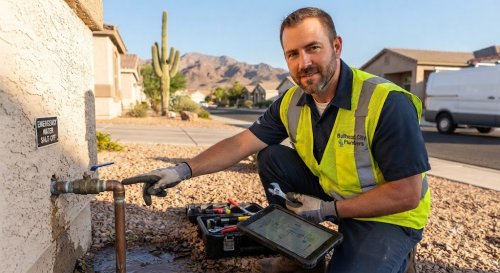
- Main Water Shutoff Valve: Ensure that both the municipal meter valve (if accessible) and your home’s main shutoff valve are fully open. If a valve is even partially closed, it severely restricts volume and pressure.
- Pressure-Reducing Valve (PRV): Many homes have a bell-shaped PRV installed where the main water line enters the house. This device protects household plumbing from excessively high municipal supply pressures. Over time, internal springs and seals inside the PRV can fail, causing the valve to stick in a restrictive position, resulting in a sudden or gradual drop in household pressure. Adjusting or replacing a failing PRV typically requires specialized pressure-testing gauges and plumbing experience.
When Low Pressure Appears Suddenly
A gradual drop in pressure is almost always caused by mineral scale buildup, failing PRVs, or slow pipe corrosion. However, a sudden, dramatic drop in pressure points to a different set of possibilities:
- A partially closed main shutoff valve following recent plumbing work.
- A major leak somewhere between the water meter and the home foundation.
- Municipal supply interruptions or emergency repairs happening on city water mains in your neighborhood.
If you experience a sudden loss of pressure, check with immediate neighbors to see if they are experiencing similar symptoms. If the whole neighborhood is affected, the issue originates with the municipal water utility rather than your private plumbing.
Preventing Future Pressure Drops
While you cannot change the mineral content of regional water supplies, you can minimize its impact on your plumbing system. Routinely cleaning faucet aerators every few months prevents scale from hardening permanently. If mineral accumulation is severe throughout your entire home, exploring whole-house water softening systems can protect your pipes, fixtures, and water-using appliances from premature restriction and wear.