Troubleshooting Low Water Pressure in Your Bullhead City Home
Learn how to diagnose and troubleshoot low water pressure in your Bullhead City home. Discover local hard water factors, fixture checks, and system tests.

Understanding Low Water Pressure in the Desert Climate
Dealing with sudden or gradual low water pressure can be frustrating. When you turn on a kitchen faucet or step into the shower and experience a weak trickle, finding the root cause requires systematic troubleshooting. In regions like Bullhead City, Arizona, where local water supplies carry a high mineral content, water pressure issues often stem from a combination of mechanical wear, pressure regulator settings, and mineral accumulation inside pipes and fixtures.
The first step in resolving low water pressure is determining whether the problem affects a single fixture or your entire house. This simple distinction completely changes your diagnostic path and saves you from wasting time on parts of the plumbing system that are working perfectly fine.
Single-Fixture vs. Whole-House Low Pressure
Before assuming your entire plumbing system is failing, isolate the problem. Walk through your home and test multiple water sources:
- Only one sink or shower is affected: If the pressure is fine in the kitchen but poor in the guest bathroom, the issue is almost certainly localized to that specific fixture, its supply lines, or its shutoff valve.
- Multiple fixtures throughout the home are affected: If every shower, sink, and hose bib has weak flow, the restriction is happening upstream where water enters the house or at the main pressure-regulating valve.
- Hot water only vs. cold water only: If low pressure happens exclusively when using hot water, the restriction is typically isolated to the water heater supply lines, a failing isolation valve, or heavy sediment buildup inside the tank itself.
Common Causes of Single-Fixture Pressure Drops
When just one faucet or showerhead loses pressure, the fix is usually straightforward and requires no specialized plumbing tools.
1. Clogged Faucet Aerators
Aerators are the small mesh screens screwed onto the tips of faucets designed to mix air into the water stream and prevent splashing. In Bullhead City homes, hard water minerals—primarily calcium and magnesium—precipitate out of the water and crystallize inside these fine screens. Over time, mineral scale chokes off the water passage.
What to check: Unscrew the aerator from the end of the faucet spout. If you see white crust or gritty buildup, soak the screen in a small container of white vinegar for 30 minutes, brush away the loosened scale, and screw it back on.
2. Partially Closed Supply Valves
Underneath sinks and behind toilets are small angle stop valves. If someone bumped these valves during cleaning or if they drifted out of position, they may not be fully open. Turn the handle counterclockwise to ensure it is wide open.
3. Damaged Cartridges or Diverters
Single-handle faucets and shower mixing valves rely on internal plastic or ceramic cartridges. If mineral debris jams these internal moving parts, water cannot pass freely. In shower systems, a worn-out tub spout diverter valve can also bleed off water pressure, causing part of the stream to escape out of the tub spout while you are trying to use the overhead shower.
Whole-House Low Pressure Causes and Checks
If every plumbing fixture in the home suffers from low flow, look toward the main service line and the pressure control equipment.
1. The Main Water Shutoff Valve
Check the main water shutoff valve where the supply line enters your home—whether located near an exterior wall, inside a garage utility closet, or in an in-ground meter box near the property line. Ensure the valve handle is turned completely parallel to the pipe. A valve that is only three-quarters open will severely restrict overall flow.
2. Pressure Reducing Valve (PRV) Failure
Most municipal water systems deliver water at pressures higher than residential pipes can safely handle. A Pressure Reducing Valve (PRV) lowers this incoming pressure to a safe level, typically between 50 and 70 psi. Over time, the internal springs and rubber diaphragms inside a PRV fatigue or fail completely. When a PRV fails, it often sticks in a closed position, causing a drastic, house-wide drop in water pressure.
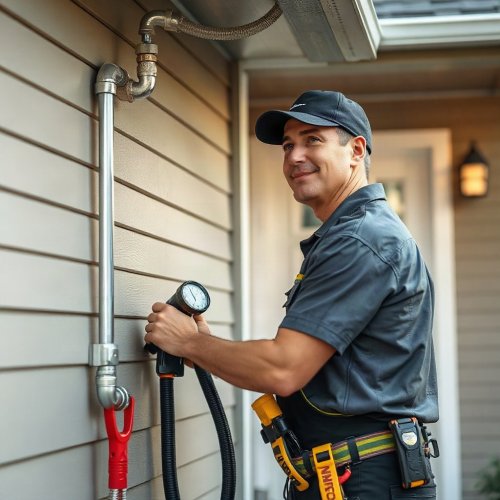
You can test system pressure using a simple water pressure gauge that screws onto an outdoor hose bib. If the gauge reads significantly below normal municipal supply pressures and adjusting the adjustment bolt on top of the PRV yields no change, the regulator has likely reached the end of its service life and requires replacement.
3. Mineral Scale Inside Galvanized or Aging Pipes
While modern homes utilize PEX or copper piping, older properties may still contain galvanized steel pipes. Over decades of service, mineral deposits layer up inside galvanized pipes, slowly narrowing the interior diameter until water can barely squeeze through. This is a common whole-house pressure issue that cannot be fixed by cleaning fixtures; it requires repiping affected sections.
When to Seek Professional Diagnosis
While cleaning aerators and verifying valve positions are manageable tasks for property owners, certain situations require professional diagnostic tools. A licensed plumber can perform static and dynamic pressure tests, inspect underground service lines for hidden leaks, evaluate water heater performance, and safely replace faulty pressure regulators or corroded main lines.
If your pressure dropped suddenly without explanation, or if you notice unusual dampness in your yard near the main water meter, you may be dealing with a subterranean service line leak rather than a simple valve or regulator restriction. Prompt evaluation helps protect your property from structural damage and prevents excessive water waste.
Practical Maintenance Takeaway
Regular maintenance can prevent many common pressure-related headaches. Periodically cleaning aerators, testing your outdoor hose bib pressure once a year, and inspecting supply valves will keep your plumbing system running efficiently. Understanding how your home's water distribution system is segmented allows you to troubleshoot symptoms accurately and make informed decisions whenever pressure drops occur.