Troubleshooting Low Water Pressure in Your Bullhead City Home
Learn how to diagnose and troubleshoot low water pressure in your Bullhead City home. Discover how to identify fixture vs. whole-house pressure issues caused by hard water and mineral buildup.

Understanding Low Water Pressure in Your Home
Dealing with a weak trickle coming from your shower or kitchen faucet can be frustrating. When water pressure drops suddenly or declines gradually over time, finding the root cause requires systematic troubleshooting. In many cases, the fix is straightforward, but understanding whether the restriction is isolated to a single fixture or affecting the entire house is the critical first step.
In regions with high mineral content in the municipal supply, such as Bullhead City, Arizona, water pressure issues often trace back to physical blockages inside aerators, valves, or piping rather than a utility-side problem. Mineral precipitation—primarily calcium and magnesium—accumulates wherever water flows or rests, gradually choking off the internal diameter of fixtures and pipes.
Is It One Fixture or the Whole House?
Before assuming your entire plumbing system is failing, isolate the problem. The quickest way to narrow down the cause is to check multiple water sources:
- Test a single fixture: Check if the low pressure affects only the hot water side, only the cold water side, or both. If it is only one side, the issue is likely local to that supply line or the fixture itself.
- Compare multiple rooms: Turn on the kitchen sink, a bathroom faucet, and an outdoor hose bib. If the pressure is strong at the hose bib (which bypasses indoor fixtures and water softeners) but weak inside, the problem is internal.
- Check neighbors: Ask if nearby properties are experiencing similar issues. If a municipal main has broken or the local utility is performing maintenance, the pressure drop originates outside your property line.
Common Culprits Behind Isolated Low Pressure
If only one or two fixtures are affected, the diagnostic process is usually simple and can often be resolved without specialized tools.
Clogged Faucet Aerators
The most common cause of localized low pressure is a clogged aerator. Aerators mix air into the water stream to maintain a smooth flow, but their fine mesh screens act as traps for mineral flakes, sediment, and pipe debris. Unscrewing the aerator tip from the faucet spout often reveals a collection of white, crusty scale. Soaking the screen in a mild descaling solution typically restores full flow immediately.
Partially Closed Shutoff Valves
Underneath sinks and behind toilets, angle stops (shutoff valves) control water flow to individual fixtures. If a valve has been bumped, partially closed during a previous repair, or has worn out internally, it will restrict volume. Ensure the valve is turned completely counterclockwise to the open position.
Whole-House Low Pressure Causes
When every tap in the house suffers from a weak stream, the issue points to a main supply restriction or a pressure regulation failure.
Pressure Reducing Valve (PRV) Failure
Most modern homes feature a Pressure Reducing Valve installed where the main water line enters the house. This device protects your plumbing fixtures from excessive municipal water pressure. When a PRV fails—often due to internal spring fatigue or sediment jamming the diaphragm—it typically defaults to restricting flow entirely, causing a severe drop in house-wide pressure. Adjusting the top bolt on the PRV can sometimes temporarily restore pressure, but a failing valve usually requires replacement by a qualified professional.
Main Shutoff Valve Restrictions
The main water shutoff valve—either located near the water meter at the property line or where the line enters the garage or utility room—must be fully open. Gate valves, in particular, feature an internal wedge that can detach from the stem if forced, blocking water flow even when the handle appears open.
Mineral Scale and Pipe Buildup
In hot, dry climates where mineral-heavy water circulates through residential plumbing, scale accumulation inside galvanized steel or older copper pipes narrows the interior passageway. Over decades, this buildup severely restricts flow volume. While water softeners prevent future accumulation, they cannot dissolve existing heavy scale locked inside older piping networks.
Safe Troubleshooting Steps for Homeowners
Homeowners can safely perform several diagnostic checks before deciding whether to call a plumber:
- Check the water meter valve: Ensure the main utility valve is completely open.
- Inspect the water heater inlet/outlet: If low pressure affects only hot water, a clogged water heater inlet valve or a failing dip tube may be restricting flow.
- Clean all aerators and showerheads: Remove showerheads and soak them in a descaling solution to clear blocked spray holes.
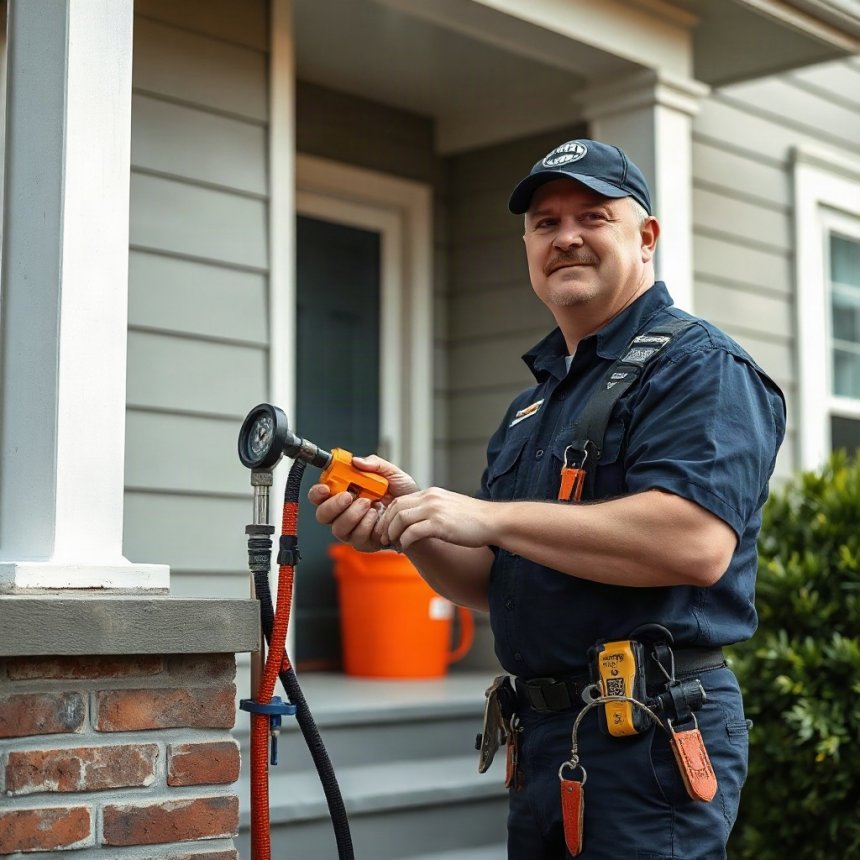
- Test pressure with a gauge: Attaching a simple water pressure gauge to an outdoor hose bib provides an exact PSI reading. Normal residential pressure typically falls between 40 and 80 PSI.
When to Consult a Professional
If your pressure gauge readings indicate low incoming pressure from the city main, contact your local water utility to verify if there are known supply issues in your area. If the municipal supply is normal but your house pressure remains inadequate, a professional plumber can test dynamic and static pressure, inspect the PRV, and locate internal restrictions using specialized diagnostic equipment.
Understanding how water moves through your home helps you separate minor maintenance tasks from systemic plumbing failures, ensuring your system runs efficiently year-round.